-
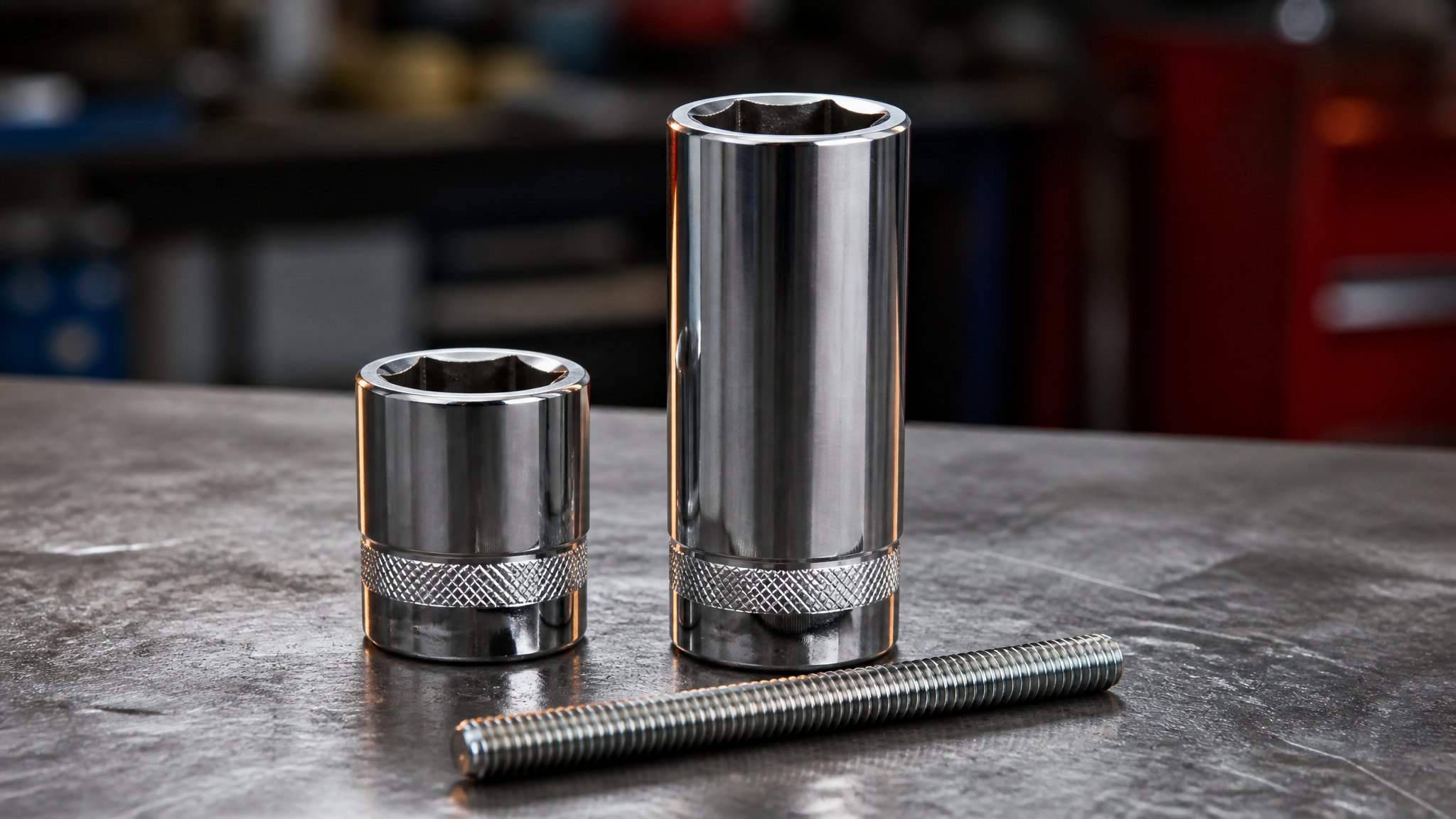
Deep Socket vs. Standard Socket: When Should You Use Each?
•
A deep socket is not the upgraded one, it is the one that reaches. Where each type wins, what fails when you pick wrong, and what to spec on a PO.
-
Thin-Wall vs. Standard Sockets: Which Is Better for Tight Spaces?
•
When working in tight or recessed areas, choosing the right socket can make a big difference. A standard socket may work well in open spaces, but a thin-wall socket can provide the extra clearance needed to reach difficult fasteners. So, which one is better? The answer depends on your application.…
-
Mirror Polish vs. Matte Finish vs. Black Finish: Which Socket Is Better?
•
When choosing a socket set, most people focus on size, material, strength, and drive type. But what about the surface finish? Mirror polish, matte finish, and black finish are three common options. Each has its own advantages, depending on how and where you use your sockets. So, which socket finish…
-
How Heat Treatment Improves Ratchet Wrench Strength and Durability?
•
Heat treatment is one of the most important processes in ratchet wrench manufacturing. It directly affects the strength, wear resistance, and service life of the tool. Even when two ratchet wrenches are made from similar steel, differences in heat treatment can lead to significant differences in performance. For professional automotive…
-
CR-V Steel in Ratchet Wrenches: What Buyers Should Know?
•
When buying ratchet wrenches, one specification appears again and again: CR-V steel. But what does CR-V actually mean? Is every CR-V ratchet wrench the same? And what should buyers check before placing an order? For professional buyers, distributors, importers, and tool brands, the answer is important: the words “CR-V” alone…
-
How a Ratchet Wrench Mechanism Works: Inside the Gear System?
•
A ratchet wrench is one of the most useful hand tools for fastening and loosening bolts and nuts. Its biggest advantage is simple: you can turn a fastener without removing the socket after every movement. But how does a ratchet wrench actually work? Inside the compact wrench head is a…
-
5° Swing Arc: Why It Matters in Tight Automotive Spaces?
•
When repairing a vehicle, space is not always on your side. Engine bays, suspension systems, and other automotive components can leave very little room to move a ratchet wrench. This is where swing arc becomes an important factor. What Is Swing Arc? Swing arc is the angle a ratchet handle…
-
What Does 72-Tooth Mean on a Ratchet Wrench?
•
When choosing a ratchet wrench, you may often see terms like 24-tooth, 36-tooth, 72-tooth, or even 90-tooth. But what does “72-tooth” actually mean? Simply put, the number refers to the number of teeth inside the ratchet gear mechanism. A 72-tooth ratchet provides a smaller swing angle, making it easier to…

Recent Posts
Follow Us
Advertisement
Advertisement example