
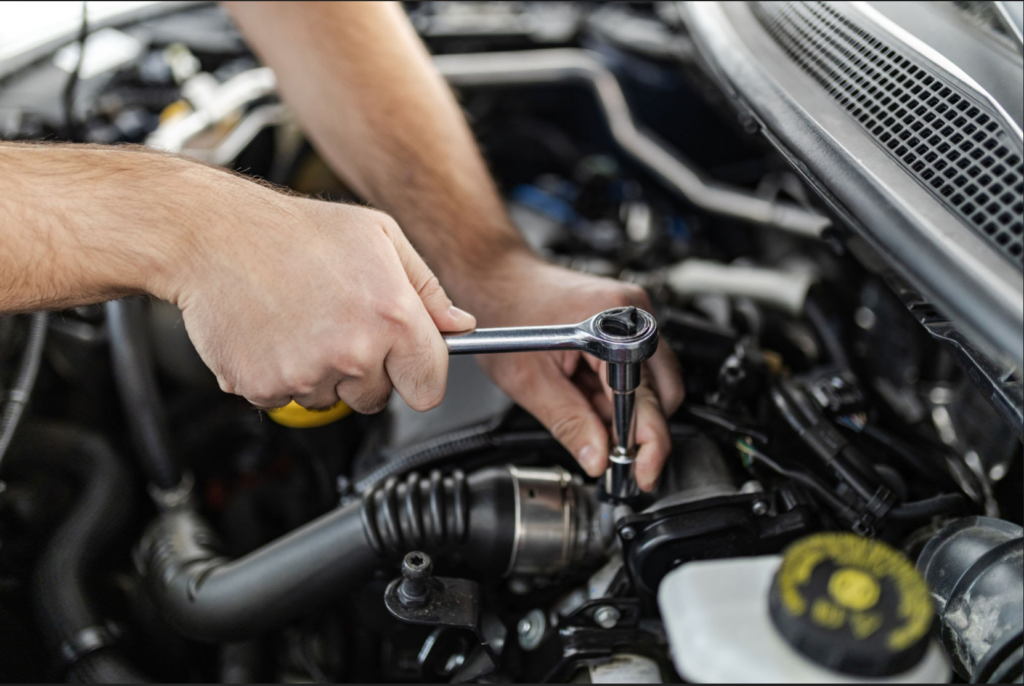
A ratchet wrench is one of the most useful hand tools for fastening and loosening bolts and nuts. Its biggest advantage is simple: you can turn a fastener without removing the socket after every movement.
But how does a ratchet wrench actually work?
Inside the compact wrench head is a simple but effective system made up of a ratchet gear, pawl, spring, direction selector, and drive square.
The Main Parts of a Ratchet Wrench
Ratchet Gear
The ratchet gear is a circular gear with teeth around its outer edge. It connects to the square drive and transfers rotational force to the socket.
Ratchets are available with different tooth counts, such as 24, 36, 72, or 90 teeth. More teeth generally mean a smaller swing angle.
Pawl
The pawl is the small component that engages with the gear teeth.
When you turn the wrench in the selected direction, the pawl locks against the gear and transfers torque. When you move the handle back, the pawl moves over the teeth, allowing the handle to return without turning the fastener backward.
Direction Selector
The selector switch changes the position of the pawl, allowing the ratchet to drive clockwise or counterclockwise.
This lets you quickly switch between tightening and loosening.
Spring
A small spring keeps the pawl properly positioned against the gear, helping maintain consistent engagement during operation.
How Does a Ratchet Wrench Work?
The process is straightforward:
- Attach a socket to the square drive.
- Place the socket over the fastener.
- Move the handle in the selected direction.
- The pawl locks against the gear and transfers torque to the socket.
- Move the handle back. The pawl rides over the gear teeth, producing the familiar clicking sound.
- Repeat the movement until the fastener is tightened or loosened.
This allows you to work efficiently even when there is very little room to move the handle.
Why Does a Ratchet Click?
The clicking sound comes from the pawl moving over the teeth of the ratchet gear during the return stroke.
The number of teeth determines the theoretical engagement angle:
Engagement angle = 360° ÷ Number of teeth
For example, a 72-tooth ratchet has a theoretical engagement angle of about 5°, while a 90-tooth ratchet is about 4°.
A higher tooth count can therefore be useful when working in tight spaces because the handle requires less movement before the next engagement.
Why Does Ratchet Quality Matter?
A ratchet may look simple from the outside, but its performance depends on the design and manufacturing of its internal components.
Important factors include:
- Gear and pawl material
- Tooth geometry
- Heat treatment
- Manufacturing tolerances
- Lubrication
- Spring design
- Overall load capacity
Using a ratchet beyond its intended capacity can damage the gear or pawl. For extremely tight fasteners, a breaker bar is generally more appropriate for applying high loosening torque.
How to Maintain a Ratchet Wrench
Regular maintenance can help extend the life of the mechanism.
Keep the ratchet head clean, use the manufacturer’s recommended lubricant, and avoid exposing the mechanism to excessive loads or contamination.
If the ratchet begins to slip unexpectedly, stop using it and inspect the internal mechanism for wear or damage.
Final Thoughts
The ratchet wrench combines a simple gear-and-pawl system with precise engineering to make fastening work faster and easier.
The gear transfers torque, the pawl controls one-way movement, the selector changes direction, and the spring maintains engagement. Together, these components create the familiar ratcheting action that makes the tool so useful in automotive repair, machinery maintenance, assembly, and everyday DIY work.
Leave a Reply