-
Selecting the Right Socket Drive Sizes (1/4″, 3/8″, 1/2″, 3/4″) for Your Market
•
In the hand tool industry, drive size refers to the dimensions of the square drive tang on a ratchet and the corresponding square recess on a socket. Selecting the right combination of drive sizes (1/4″, 3/8″, 1/2″, and 3/4″) is fundamental to building a balanced product catalog that matches regional…
-
How to Prevent Tool Rust in High-Humidity Environments
•
For hardware importers, tool distributors, and workshop owners operating in high-humidity regions—such as coastal industrial hubs, tropical export destinations, and unconditioned warehouse spaces—surface rust (iron oxide) is a constant threat. Moisture in humid air reacts with oxygen and raw steel surfaces, creating iron oxide. Unprotected ratchet wrenches, sockets, pliers, and…
-
Pass-Thru Ratchet Systems: Solving Tight Space and Long Stud Challenges
•
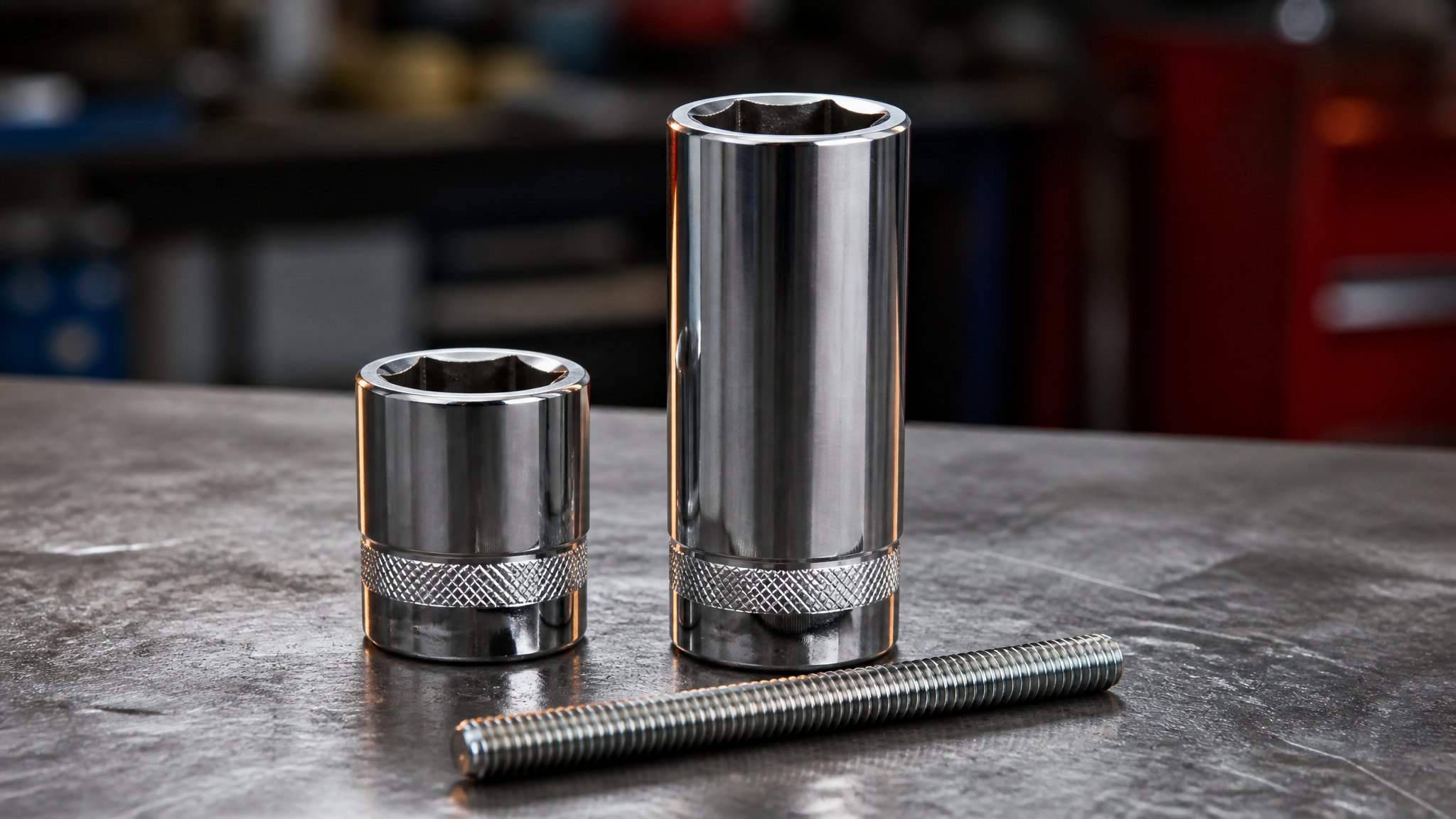
In automotive repair, HVAC installation, and industrial plumbing, technicians frequently run into a frustrating limitation of standard drive tools: threaded rods and long studs hitting the bottom of standard sockets. Traditional workarounds—like switching to a slow open-end wrench or using expensive deep sockets that often lack overhead clearance—waste time and…
-
Why Flex-Head Ratchet Wrenches Are Becoming Essential in Automotive Workshops?
•
In modern automotive repair shops, technician speed and tool accessibility directly dictate shop profitability. As vehicle manufacturers pack larger engines, turbochargers, hybrid battery modules, and complex emissions systems into increasingly cramped engine bays, traditional fixed-head ratchets frequently stall out against obstruction barriers. Enter the Flex-Head Ratchet Wrench. Once considered a…
-
Best Ratchet & Socket Combinations for Heavy Industrial Repair Work
•
In heavy industrial repair—spanning mining infrastructure, power generation plants, agricultural machinery, and commercial fleet maintenance—standard automotive hand tools quickly reach their limits. Heavy industrial MRO (Maintenance, Repair, and Operations) requires drive tool combinations engineered for high torque loads, severe vibration, tight clearances, and harsh chemical environments. For tool distributors and…
-
Common Testing Methods for Socket Wrench Durability and Hardness (HRC)
•
When sourcing wholesale socket wrenches and drive tools, relying solely on a manufacturer’s material claims is a major risk. A socket may look pristine with its mirror chrome plating, but without precise metallurgical heat treatment and rigorous quality testing, it can split under load, round off fastener heads, or wear…
-
Ergonomic Handle Designs: Reducing Operator Fatigue in Industrial Uses
•
In industrial assembly plants, commercial automotive bays, and heavy MRO facilities, technicians operate hand tools for hours at a time. While torque ratings and steel grades dominate technical discussions, handle ergonomics directly impacts daily productivity, operator safety, and long-term strain injuries. Repetitive hand strain, pressure points, and slippery grips lead…
-
The Manufacturing Process of Chrome Vanadium Sockets Explained
•
Behind every high-torque mechanic’s socket lies a multi-stage industrial manufacturing process designed to balance extreme hardness, impact resistance, and long-term corrosion protection. While a socket may appear to be a simple piece of shaped steel, converting raw Chrome Vanadium (Cr-V 50BV30/6150) alloy into a precision-engineered tool requires cold forging, high-precision…

Recent Posts
Follow Us
Advertisement
Advertisement example