Uncategorized

News

  • From beginners to automotive repair experts

    With the booming development of the global hardware tools trade market, the highly anticipated 10th China Yiwu International Hardware & Electrical Expo has recently officially kicked off. As a leading manufacturer in the hardware tools industry, [dopsigen] showcased its independently developed high-precision ratchet wrench sets, professional-grade socket series, and a variety of home/industrial hardware tools, demonstrating the precision craftsmanship and innovation capabilities of “Made in China” to global buyers.

    Exquisite Quality, Defining ‘Lightweight and Efficient’
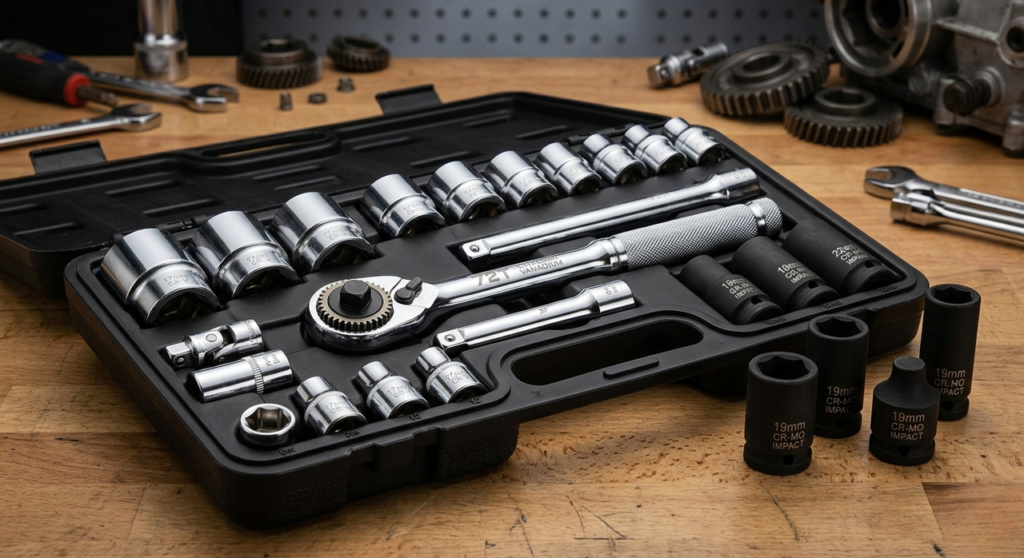
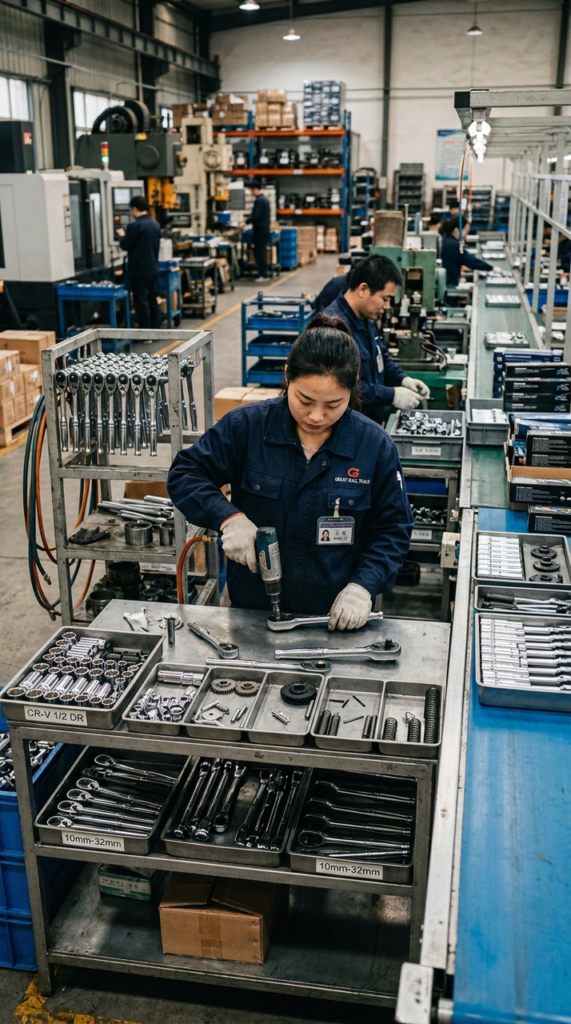
    At Booth [B20], the [dopsigen] display area was crowded with visitors. The core product on display—industrial-grade ratchet wrench sets—attracted numerous domestic and international buyers with its unique 72-tooth precision ratchet design (driving with only a 5° turn).

    • Material Breakthrough: Made of high-strength chrome vanadium steel (Cr-V) forged as a whole and subjected to rigorous heat treatment processes, torque performance surpasses ANSI standards, ensuring no slippage or breakage under high-intensity work.
    • Surface Finish: The entire series features matte chrome or mirror polish finishing, which not only prevents rust and corrosion but also enhances comfort and aesthetics when gripping.

    Full Scenario Coverage, One-Stop Solution
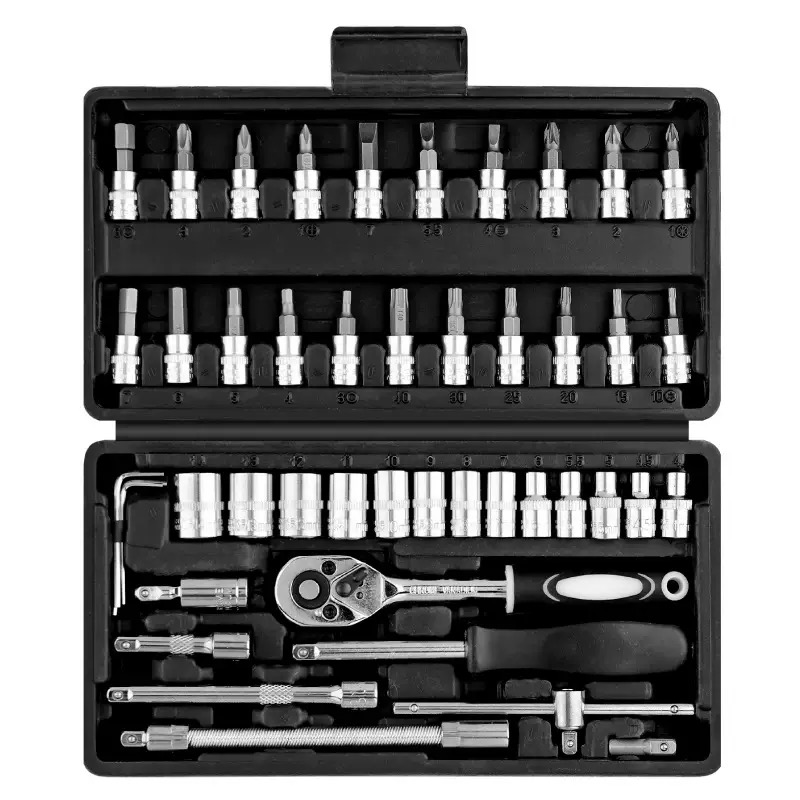
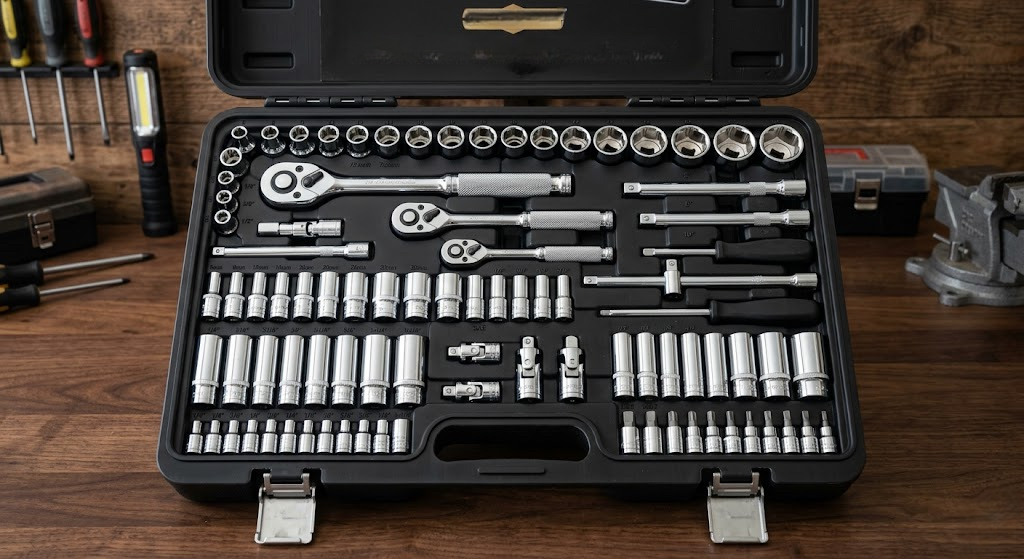
    To meet diversified market needs, [dopsigen] brought dozens of socket set specifications. From microelectronics repair to heavy machinery maintenance, the products cover both metric and imperial sizes and are complemented with extensions, universal joints, and L-shaped slide bars, truly achieving “one tool set, full coverage.”

    “We are not just selling products; we are delivering efficiency.” “The Yiwu Expo is a global window. This year, we specifically optimized packaging design and set configurations for cross-border e-commerce and export markets, aiming to provide customers with more competitive flexible customization services.”

    Digital Empowerment Expands Global Trade Footprint
    Leveraging the strong reach of the Yiwu Expo, dopsigen launched a dual ‘online + offline’ interactive mode at the exhibition. Through live demonstrations, technical briefings, and digital supply chain connections, the brand successfully attracted purchasing groups from Southeast Asia, the Middle East, Europe, and other countries and regions.

    In the future, the company will continue to uphold the philosophy of ‘craftsmanship creates quality,’ continuously innovate, and provide more reliable hardware tool solutions for global users.

  • From beginners to automotive repair experts

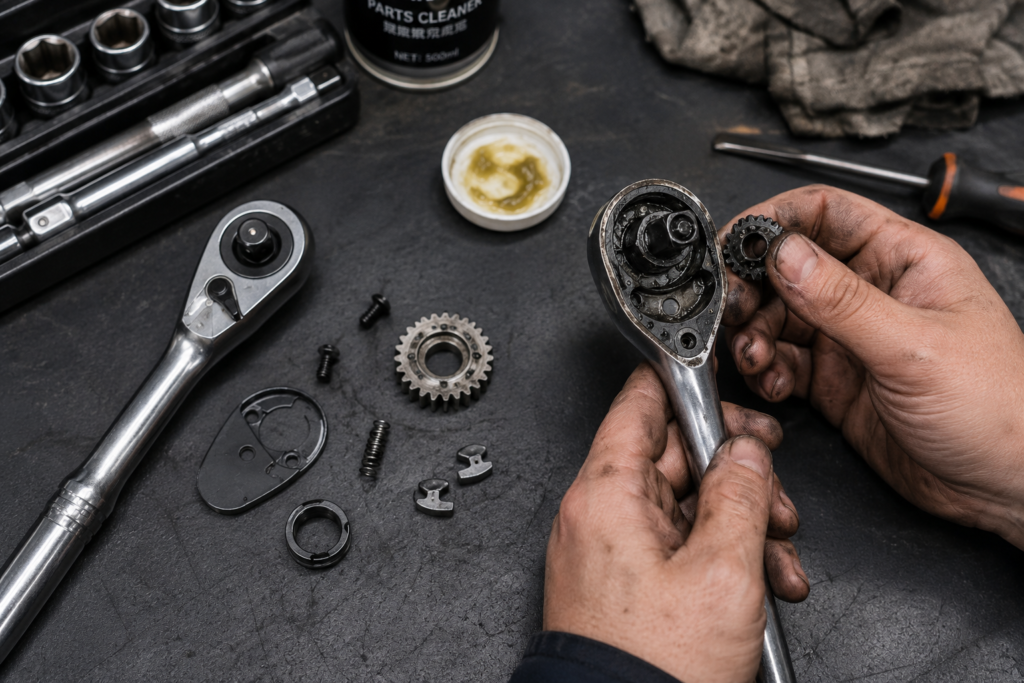
    The ratchet mechanism of a ratchet wrench is a unidirectional intermittent motion mechanism composed of a ratchet and a pawl. The ratchet mechanism mainly consists of a lever, a pawl, and an external ratchet wheel. When the lever swings clockwise, the pawl hinged to the lever will engage with the teeth of the ratchet wheel, causing the ratchet wheel to rotate through a certain angle. Having understood the internal principle of the ratchet wrench, we will next look at some other common knowledge questions.

    How to determine the size of a ratchet wrench? Should you measure the square section of the ratchet wrench or use another method? Should you measure the diagonal of the square head or the side length? The answer is to measure the ‘opposite sides’ of the square head, that is, the two parallel sides. Square heads are all based on the imperial system, where one inch equals 25.4mm. By corresponding to 1/4″, 3/8″, 1/2″, a 1/2-inch ratchet wrench is calculated as 25.4 divided by 2, which in China is called a 12.5mm large ratchet wrench. As for which size of socket to pair with which nut or bolt, the detailed specifications are usually provided when purchasing, such as “6.3mm x 10mm” or “1/4″ x 10mm”. The first number represents the size of the square drive, and the second number represents the size of the object it can tighten.

    There is now a ratchet wrench called a quick-release ratchet. What are its characteristics? The self-locking quick-release ratchet has a button on the back of the wrench; when the button is pressed, the socket will automatically release, and when the button is not pressed, the socket stays locked and does not fall off. For example, the quick-release ratchets in dopsigen tools, in addition to the standard professional type, also feature a 180-degree swivel head design, allowing adjustments in 15-degree increments for each turn. The toothed design at the joint can lock at 13 different angles, helping the quick wrench reach the ideal position for disassembly. Its narrow, small ratchet head, combined with a precision 72-tooth high-efficiency ratchet design, requires only a 5-degree turning space, enabling quick nut tightening and loosening, and allows flexible, fast operation in tight spaces, thereby improving work efficiency.

    It should also be noted that the ratchet mechanism transmits force weakly, producing impact and noise during operation. This makes ratchet mechanisms suitable only for situations with low speed, small rotation angle, and low power.

    Ratchet wrenches are used for tightening and loosening nuts and bolts. They are characterized by strong applicability, ease of use, labor-saving, and high torque performance, making them the first choice for professional auto repair or mechanical maintenance.

  • From beginners to automotive repair experts

    Do you also think that all socket tools are more or less the same?
    Big mistake!
    Using the wrong socket can make repairing cars, home appliances, or equipment feel like you want to smash your tools at any moment!

    First pain point: slips easily!
    The screw won’t turn, but the socket itself rounds off first.
    Especially with rusty or high-strength screws, ordinary sockets just can’t grip, and every turn slips—so exhausting!

    Second pain point: can’t tell metric from imperial, use the wrong one and you have to make two trips.
    It feels almost the same, but when you put it on and turn—it’s loose.
    You think it will save trouble, but the screw head gets stripped and can’t even be removed.

    Third pain point: socket too thick, can’t reach tight spaces.
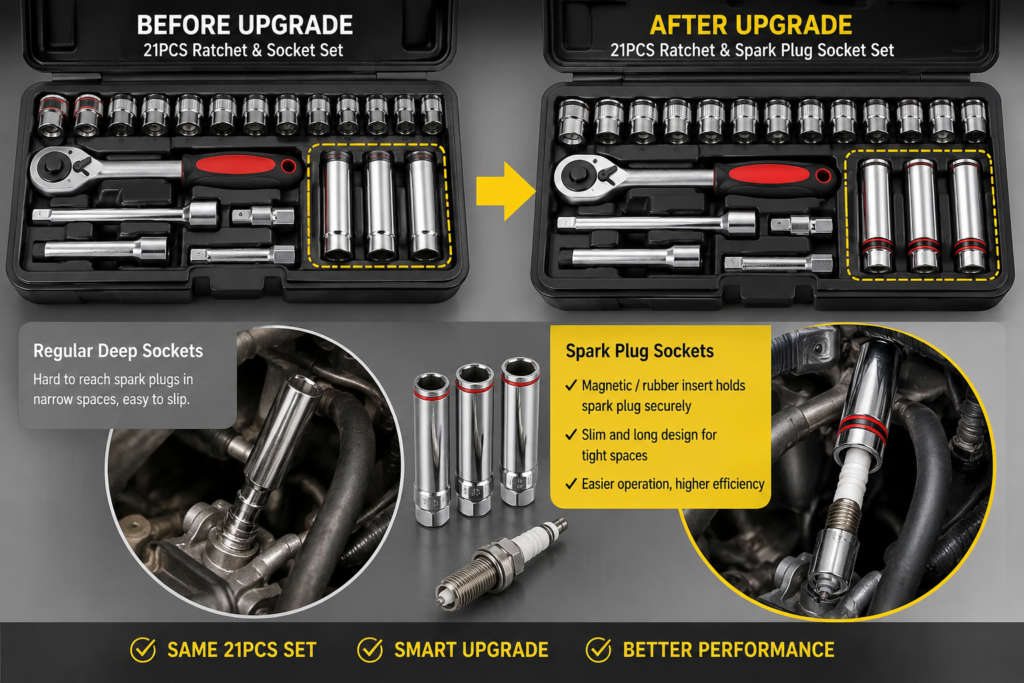
    Changing a spark plug or removing a chassis bolt, the ordinary socket gets stuck and can’t fit—you’re just left staring.

    Fourth pain point: cracks and breaks after a few uses.
    Especially cheap sockets—apply force and they chip. Scraping your hand is minor, hurting someone is serious.

    In fact, a truly good set of sockets should:
    ✅ Have high-hardness anti-slip design
    ✅ Clearly marked metric and imperial sizes
    ✅ Thin walls and narrow body to fit into tight spaces
    ✅ Made of chrome-moly steel/chrome-vanadium steel, impact-resistant and won’t chip

  • From beginners to automotive repair experts

    As an auto mechanic or equipment maintenance engineer, you might be familiar with scenarios like this:

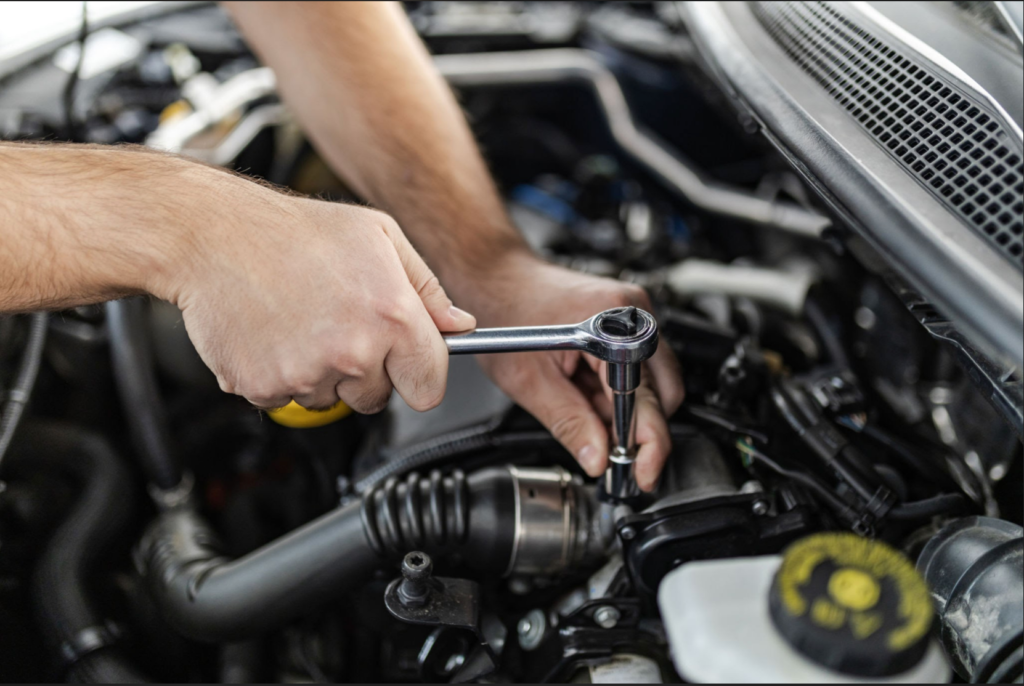
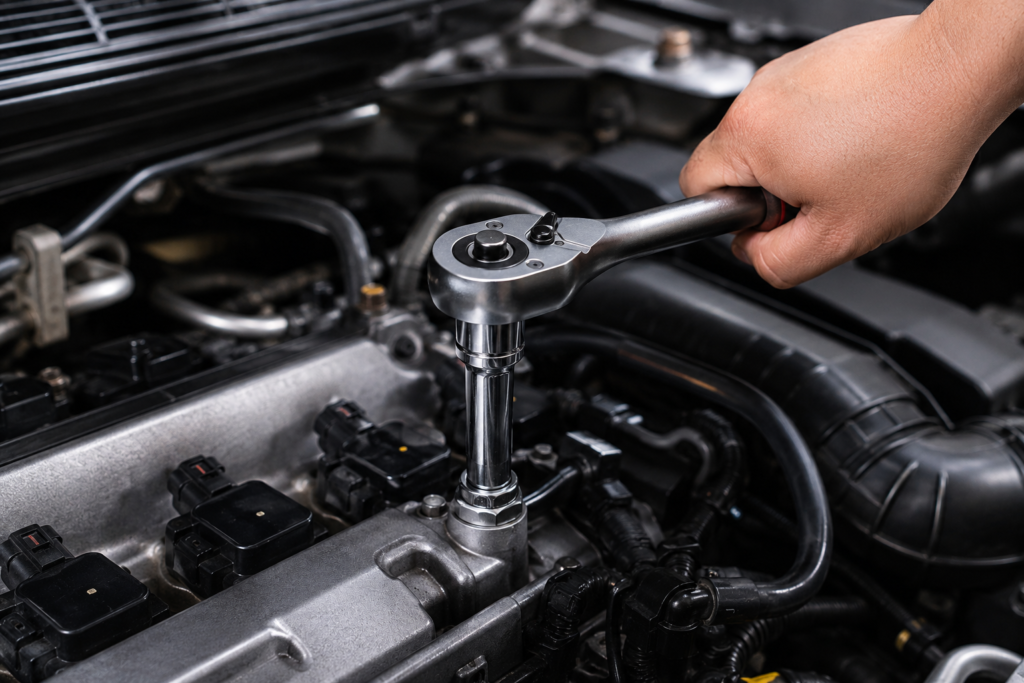
    You are trying to remove a bolt hidden deep in the corner of the engine bay. A standard wrench won’t fit, and a regular socket can’t secure properly due to height issues. You have to flip the wrench repeatedly, struggling to find the few degrees of swing space in a tight spot.

    This is why our factory focuses on producing 72-tooth high-torque ratchet wrenches and thin-wall deep sockets. We believe a good tool doesn’t make you adapt to the machine—it adapts to you.

    1. 5° Tooth Clearance: The Real ‘Micro-Movement Miracle’ for Tight Spaces
      Common tools on the market usually have 24 or 36 teeth, meaning you need at least 10°-15° of swing space. In modern high-density assembled equipment, such 10° is often a luxury.

    Our 72-tooth ratchet wrench compresses the engagement angle to just 5°.

    What does this mean? In narrow areas where even fingers can barely move, you only need to move your wrist 5°, and the ratchet mechanism can engage precisely to tighten or loosen the bolt.

    Material Guarantee: Made of CR-V (Chrome-Vanadium Steel) forged and heat-treated. More teeth do not mean reduced strength—we use precision CNC machining to ensure each tooth can withstand high torque loads, eliminating the risk of slipping.

    1. Say Goodbye to ‘You Can Loosen It, But Not Reinstall It’
      Have you encountered this situation: a bolt is loosened, but the socket and wrench can’t be pulled out because the few millimeters the bolt rises just block the tool?

    Our through-design ratchet wrench combined with extended thin-wall sockets solves this pain point:

    Through Design: Allows long bolts to pass directly through the wrench head, especially suitable for suspension systems or long screw applications.

    Thin-Wall Sockets: Wall thickness reduced by 30% compared to standard sockets, easily reaching recessed hub bolts or spark plug wells.

    We have incorporated three core details into this ratchet and socket set:

    Surface Treatment: Fully polished mirror finish (or matte anti-rust coating based on your product selection). Not only corrosion-resistant, but also easy to clean oil, keeping hands slip-free.

    Bi-Directional Dial: Even with gloves or greasy hands, you can easily toggle the forward/reverse dial with one hand, without struggling with the pinky like with low-end tools.

    Laser Engraving: Every socket and wrench has laser-engraved size markings (metric/imperial), clear and wear-resistant. This significantly reduces the time spent picking the wrong size from your toolbox.

    Factory Inspection: Every wrench undergoes torque testing before packaging, ensuring it meets or exceeds ANSI (American) and DIN (German) standards.

    Conclusion
    Tools are an extension of your hands. A lousy wrench will leave your joints sore after work; a set of high-precision, high-tooth, ergonomically designed ratchet sockets will let you focus on the repair work itself, instead of struggling with tools.

    It’s time to upgrade your toolbox.

  • From beginners to automotive repair experts

    In auto repair shops, pipeline installation sites, or in front of household appliance repair benches, are you still spending half an hour manually turning a wrench at a bolt in a tight space? This is not only physically exhausting but also a waste of time. Today, we are introducing the electric ratchet wrench—it is not an ordinary power tool but an efficiency tool specifically designed for narrow spaces and high-frequency tasks.

    What is an electric ratchet wrench? Traditional ratchet wrenches rely on manual back-and-forth motion, while electric ratchet wrenches use an internal motor to drive the ratchet mechanism at the head to spin at high speed. You only need to hold down the switch, and it can tighten or remove nuts at hundreds of revolutions per minute, providing precise impact force at the moment of fastening to prevent overloading or stripping.

    In simple terms: it turns repetitive physical work into continuous electric speed work.

    Three core advantages: why do you need it?

    1. Extreme narrow spaces, always effective
      Whether it’s a corner under a car hood or screws behind an air conditioning outdoor unit, traditional pneumatic wrenches or electric drills often cannot reach due to their long bodies. The electric ratchet wrench has a compact right-angle head design, with a head height only about the thickness of a coin, easily reaching the tiniest gaps.
    2. No more sore hands, double the efficiency
      Removing a rusted chassis screw manually can take several minutes or longer. The electric ratchet wrench delivers 60-80 N·m of torque (depending on the model) and can solve the problem in 2 seconds. For technicians handling hundreds of screws daily, this is equivalent to gaining an extra 1-2 hours of work each day.
    3. Precise torque control, protects threads
      Many users worry that electric tools are “too violent.” A high-quality electric ratchet wrench comes with an adjustable torque ring and auto-stop technology. Once the preset torque is reached, the motor automatically cuts power, preventing the stripping of fine-thread screws or damage to aluminum alloy threads—something very difficult to control accurately with manual experience.

    Who actually uses it?
    · Auto repair technicians: removing engine valve covers, transmission oil pans, interior panel screws.
    · Appliance/equipment installers: quickly assembling production lines, installing air conditioning outdoor unit brackets.
    · DIY enthusiasts: modifying motorcycles, bicycles, or even building metal frame furniture.
    · Plumbers: assembling or disassembling flange bolts in tight pipe wells.

    Selection guide: two key parameters
    When you are ready to purchase, pay attention to these two indicators:

    1. Maximum torque: 30-50 N·m for home/light DIY; 70 N·m or more for professional auto repair/heavy machinery.
    2. Speed (RPM): commonly 200-300 RPM. Higher speeds allow faster unscrewing during idle runs, but control the feel carefully.
    3. Battery platform: prioritize brands compatible with your existing power tool batteries (such as drills and impact drivers) to save costs.

    Common misconceptions clarified
    Misconception 1: “Electric ratchet wrenches have less torque than manual ones.”
    Truth: The maximum torque of high-quality electric ratchet wrenches far exceeds the exertion limit of an ordinary person’s wrist (an adult male’s wrist force is about 40-50 N·m). It is sufficient for over 85% of nuts.

    Misconception 2: ‘It will hit your hand like an impact wrench.’

    Truth: An electric ratchet wrench rotates continuously and then locks at the end without the vibration impact of an impact wrench, making it very friendly to your wrist.

    Maintenance Tips

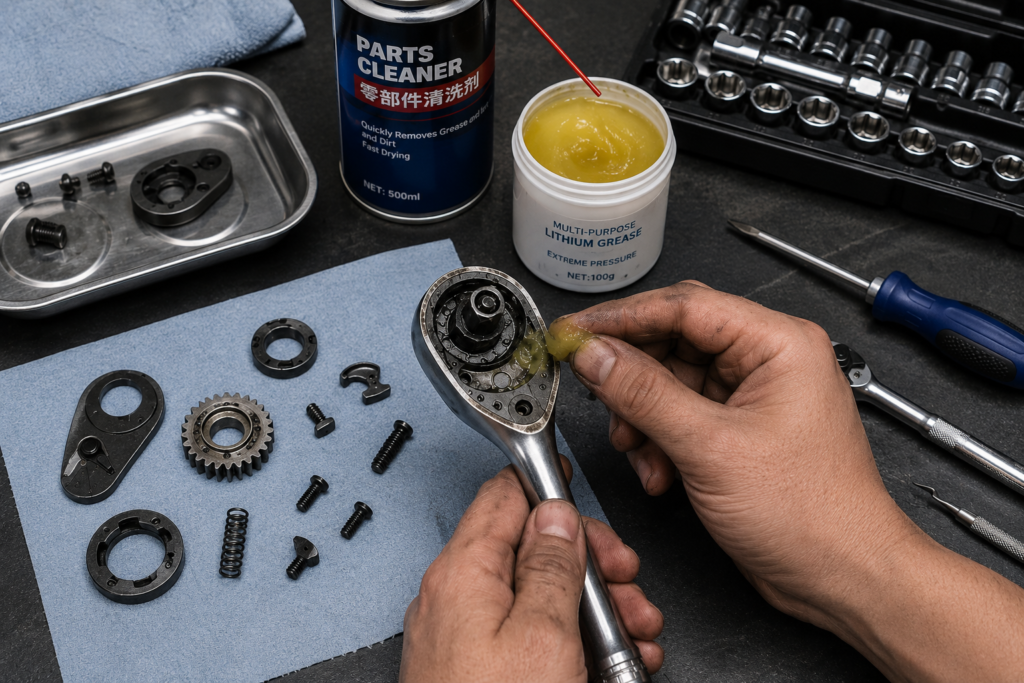
    · Clean the ratchet head after each use to prevent metal shavings from entering and jamming the mechanism.
    · Every 3-6 months, drop special lubricating oil into the oil inlet on the head.
    · Do not use it instead of an impact wrench to remove severely rusted large nuts (such as axle nuts); that is the domain of an impact wrench.

    In Conclusion

    A good electric ratchet wrench won’t turn you into a superhero, but it can help you leave work on time.

    Whether it’s a professional repair shop seeking efficiency or a home garage for occasional hands-on enjoyment, it will be one of the most frequently used tools in your toolbox.

    No more compromising in tight spaces, no more overstraining your wrist with repetitive work.

  • From beginners to automotive repair experts

    From the metallurgical furnace to the maintenance bench, witness the high-performance craftsmanship of CR-V materials.

    [Opening: The Value Belief of a Piece of Steel]

    In the world of hardware tools, material is the soul and craftsmanship is the flesh and blood. We firmly believe that a truly handy ratchet wrench should not merely be cold metal, but a balance of power and precision. For this reason, we delve into the upstream, carefully selecting chromium vanadium steel (CR-V) – the “evergreen” of alloy steels – and through rigorous multi-process chains, forge it into the efficient, durable and reliable ratchet wrenches and socket series in your hands.

    【Core Process: Three Key Elements of Quenching】

    We don’t merely purchase steel; instead, we endow tools with “life” through the following processes:

    Precision Forging: Reshaping the Framework of Power

    · Process: Precision hot forging or cold forging process is adopted. The chromium-vanadium steel at high temperature is instantly shaped by a ten-thousand-ton press, with the metal grain flow lines fully retained, eliminating porosity and looseness.
    · Value: Compared with castings, the forged wrench body has a higher density, and its impact resistance and fracture resistance are significantly enhanced.

    1. Heat Treatment: The Wisdom of Combining Hardness and Softness

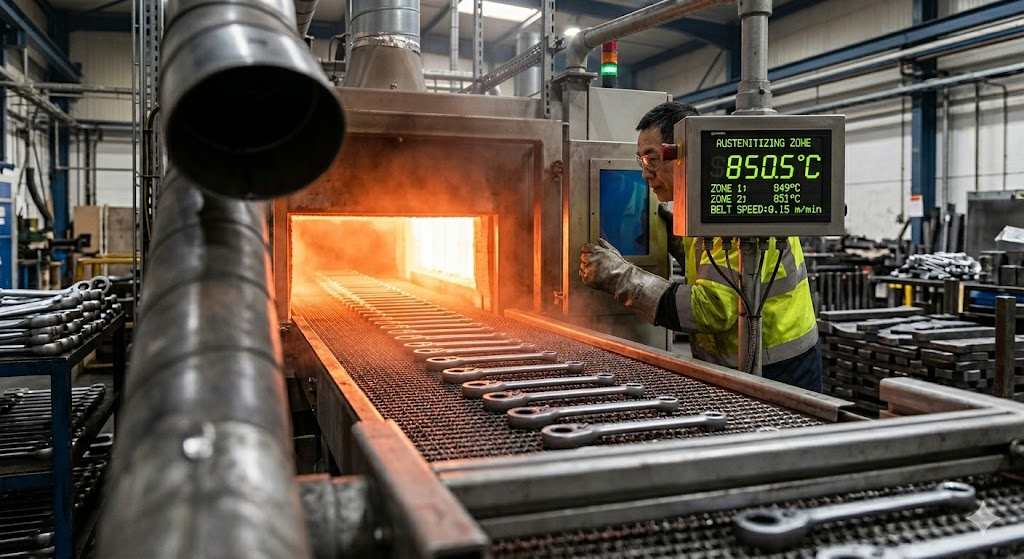
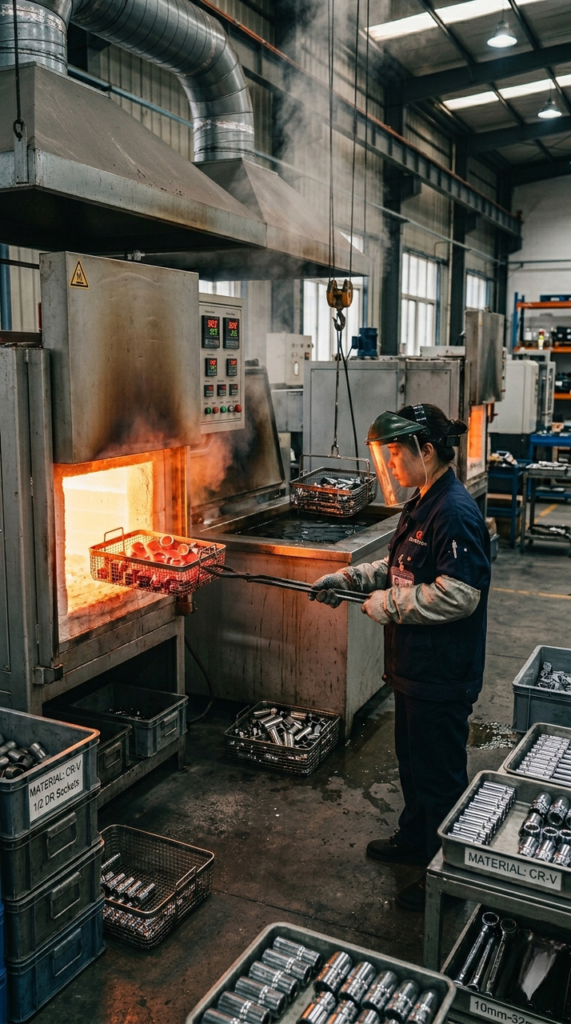
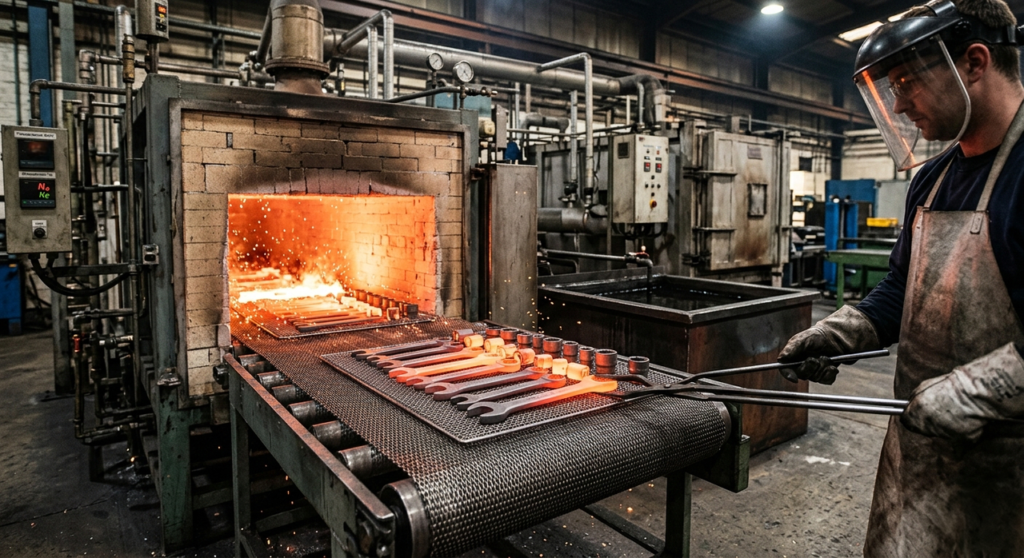
    · Process: Through multi-stage controllable atmosphere heat treatment furnaces, the quenching and tempering temperatures are precisely controlled (with an accuracy of ±5℃). The carbides of chromium and vanadium elements are fully dissolved and uniformly precipitated.
    · Value: Ensuring the hardness reaches HRC 42-48 (for the wrench body) and HRC 48-56 (for the working end of the socket). It is hard but not brittle, tough but not soft, preventing slippage and buffering the peak torque in an instant.

    1. Precision Machining: Micron-level Meshing

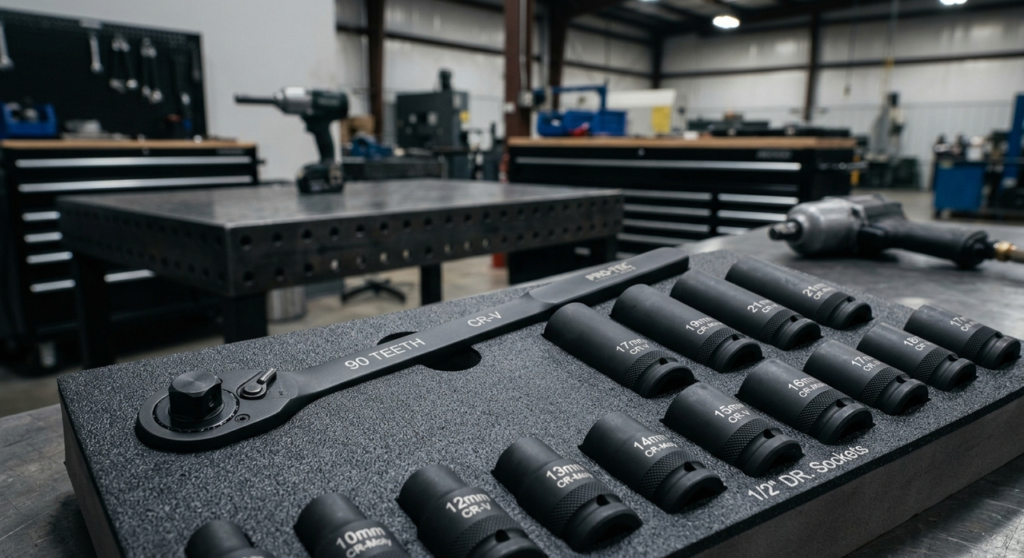
    · Process: High-precision CNC milling and profile grinding. The ratchet gear adopts a dual-density design of 72 teeth/90 teeth, matching the 12-angle or 6-angle Star drive force structure of the socket.
    · Value: Only a 5° swing angle is required to drive (72 teeth). The socket fits tightly with the fastener, with uniform force distribution, completely eliminating the problem of “slipping angles” and damaging the screws.

    【Material Highlight: Why Chromium Vanadium Steel?】

    · Wear resistance: The chromium element enhances hardenability and corrosion resistance. Even when dealing with rusted bolts, the surface chrome plating remains firm.
    · Fatigue resistance: The vanadium element refines the grain structure. Even after thousands of cycles of loading, the internal structure remains stable and is less prone to micro-cracks.
    · Cost-effectiveness: Striking a balance between high-end performance (such as some properties of chrome-molybdenum steel) and economy, chrome-vanadium steel is the gold standard for professional hand tools.

    【Final Product Testing: Three Checks Before Delivery】

    Each ratchet wrench and socket must pass through the following before packaging:

    1. Torque failure test: Reaching a safety factor of 1.5 times the ANSI/ASME and DIN standards.
    2. Ratchet fatigue test: Running continuously for 72 hours in both forward and reverse directions under load, the gear meshing remains precise.
    3. Coating adhesion test: In a salt spray environment, the chromium layer shows no peeling or red rust.

    【Conclusion and Call to Action】

    We no longer merely talk about “durability and sturdiness”, but have transformed every process of smelting, forging, heat treatment and precision processing of chromium-vanadium steel into a smooth operation experience in your hands.

    Whether you are a professional technician or a hardcore DIY enthusiast:
    👉 Get our chrome vanadium steel ratchet socket set right now
    👉 Enjoy the service of “lifetime rust and breakage free replacement”

  • From beginners to automotive repair experts

    Carbon Steel: “CS” is the designation for carbon steel, formed by the initial letters of the English words. Carbon steel is an iron-carbon alloy; it is also referred to simply as “carbon steel.” Typically, it also contains small amounts of silicon, manganese, sulfur, and phosphorus. Generally, the higher the carbon content in carbon steel, the greater its hardness and strength, though its ductility is correspondingly lower. Based on carbon content levels, carbon steel is classified into high-, medium-, and low-carbon grades; as the carbon content increases, hardness rises while toughness decreases. High-carbon steel is typically used for manufacturing tools due to its high hardness and strength; however, because it lacks toughness, it is generally unsuitable for applications such as screwdrivers (as it is prone to chipping or cracking), yet it is widely utilized as a material for various general-purpose tools, such as wrenches.

    Chromium-Vanadium Steel: Cr-V chromium-vanadium steel is an alloy tool steel enriched with the alloying elements chromium (Cr) and vanadium (V). Its combination of strength and toughness surpasses that of carbon steel, making it an ideal material for manufacturing high-quality tools. It is commonly used in the production of pliers, wrenches, and screwdrivers; manual sockets, in particular, are typically manufactured using 50BV30 chromium-vanadium steel. The primary distinction between chromium-vanadium steel and carbon steel lies in their hardness: after heat treatment, chromium-vanadium steel achieves a hardness of 60 HRC (Rockwell Hardness) or higher. In contrast, the maximum hardness attainable by medium-carbon steel is approximately 55 HRC (538 HB). Furthermore, under specific operating conditions, chromium-vanadium steel exhibits excellent wear resistance, offering superior mechanical properties and greater chemical stability compared to ordinary carbon steel.

    Chromium-Molybdenum Steel: Cr-Mo is an alloy composed of chromium (Cr), molybdenum (Mo), iron (Fe), and carbon (C). It exhibits excellent impact resistance, outstanding strength and toughness, and high resistance to elevated temperatures and pressures; overall, its performance surpasses that of chromium-vanadium steel. It is ideally suited for the manufacture of premium screwdrivers and small hex wrenches. While pneumatic sockets are typically made from 35CrMo chromium-molybdenum steel, this material is relatively expensive.

    S2 tool steel is an alloy composed of carbon (C), silicon (Si), manganese (Mn), chromium (Cr), molybdenum (Mo), and vanadium (V). It is an exceptional impact-resistant tool steel, distinguished by its superior strength and toughness; consequently, it is widely used in the manufacture of high-strength tools such as screwdrivers and hex keys. While its overall performance surpasses that of chromium-vanadium steel, its practical application in material selection is not as widespread—primarily because it is an imported material. Relatively speaking, S2 tool steel is a superior material choice compared to chromium-vanadium steel. This is because, in actual use—particularly with tools like screwdrivers—the primary issue encountered is tip wear, which leads to “cam-out” (slipping) when tightening screws. The occurrence of such wear and material loss indicates a critical need to enhance the strength of the tool tip—specifically, by ensuring it possesses a relatively higher level of hardness. The typical post-heat-treatment hardness range for S2 steel is HRC 58–62, whereas that of chromium-vanadium steel is HRC 48–52. Both the vanadium and molybdenum content in S2 steel exceed those found in chromium-vanadium steel; as a result, S2 steel demonstrates superior strength and toughness compared to the latter. A higher vanadium content correlates with enhanced toughness, while a higher molybdenum content contributes to greater hardness and strength. Collectively, these characteristics demonstrate that S2 steel is a highly effective material for screwdrivers, offering superior strength and exceptional durability.

  • From beginners to automotive repair experts


    1. Carbon steel
    · Composition: Iron + Carbon, with no or extremely trace amounts of alloying elements
    · Advantages: Lowest cost, easy to process
    · Disadvantages: Hardness and toughness cannot be achieved simultaneously; hard and brittle or soft and tough; poor rust resistance
    · Applications: Home DIY, disposable tools, low-end wholesale by weight
    · Identification: The surface is usually blackened, and chrome plating is also prone to rusting

    2. Chromium-vanadium steel (Cr-V)
    · Composition: Added chromium (Cr) to enhance hardness and rust resistance, and vanadium (V) to refine grain structure and improve toughness.
    · Advantages: Offers the best cost-performance ratio, balanced overall performance, and is the most mainstream in the tool industry.
    · Disadvantages: Has lower impact resistance than Cr-Mo and may break when used in impact wrenches.
    · Applications: Commonly used in auto repair shops, sockets, wrenches, and extension rods.
    · Identification: Surface chrome-plated, often marked with “Cr-V” or “Chrome Vanadium”.

    3. Chromium-molybdenum steel (Cr-Mo)
    · Composition: Added chromium (Cr) and molybdenum (Mo), molybdenum can enhance high-temperature strength and impact resistance.
    · Advantages: Excellent toughness, good impact resistance, deforms before breaking under high torque (high safety).
    · Disadvantages: Cost is higher than Cr-V, hardness is slightly lower than S2.
    · Applications: Pneumatic impact wrench sockets, heavy-duty tools, industrial-grade scenarios.
    · Identification: The surface is often treated with matte or black electrophoresis, and marked with “Cr-Mo” or “Chrome Molybdenum”.

    4. S2 steel
    · Composition: Silicon (Si) enhances the elastic limit, molybdenum (Mo) + vanadium (V) refines the grain structure, and has a high carbon content.
    · Advantages: Highest hardness (HRC 58±), excellent wear resistance, and strong torque capacity.
    · Disadvantages: Highest cost, and slightly lower toughness than Cr-Mo (too hard and brittle).
    · Applications: Screwdriver bits, Allen wrenches, and high-torque small-sized tools.
    · Identification: The surface is often sandblasted or matte-finished, and marked with “S2” or “S2 Steel”.

  • From beginners to automotive repair experts

    In daily work, pneumatic ratchet wrenches are our reliable assistants. However, neglecting regular cleaning and maintenance is like overburdening a diligent worker, which may eventually lead to “exhaustion,” affecting work efficiency or even causing an early “retirement.” So, how can we scientifically and effectively maintain a pneumatic ratchet wrench? Here are a few maintenance tips to help you easily care for this “silent comrade.”

    Regular “refueling” and “detox” without disassembly for easy maintenance: For non-professional repair personnel, avoid self-disassembling the wrench to prevent affecting its precision. Simply connect the wrench to the air pump interface, drip an appropriate amount of pneumatic lubricating oil, and intermittently press the trigger to ensure the oil fully penetrates the wrench interior. Then connect the air pump and alternately operate the wrench forward and backward to expel accumulated dust and impurities with the airflow. This process can be repeated several times until the wrench interior is clean as new.

    Appearance neat and performance stable: Keep the wrench’s exterior clean to avoid oil and dust accumulation affecting operation. Regularly add lubricating oil to the three-point control valve to reduce wear and ensure smooth valve operation. At the same time, pay attention to regularly draining accumulated water in the control valve to prevent moisture from corroding components.

    Filter cotton should be cleaned frequently, and internal maintenance should not be neglected: The air outlet filter cotton of the ratchet wrench body should be cleaned twice every two weeks to prevent clogging and affecting airflow. For the internal part of the wrench body, it is recommended to perform in-depth maintenance at least every six months. If fine maintenance of the transmission part is required, it is recommended to entrust it to professionals to avoid a decrease in precision due to improper disassembly.

    Calibration check: Ensure the “status online” by regularly calibrating the pressure gauge to guarantee accurate readings that match the actual pressure. Simultaneously, verify that the relationship between pressure and torque meets work requirements, ensuring stable torque output from the wrench and precise operation results.

    Comprehensive maintenance to enhance “work efficiency”: Just as humans need healthcare to maintain high productivity, pneumatic ratchet wrenches also require thorough and regular maintenance to extend their service life and improve work efficiency. By following the above maintenance steps, you can not only effectively prevent malfunctions but also significantly reduce repair costs, ensuring the wrench remains in optimal working condition to safeguard your production tasks.

    To sum up, careful maintenance of pneumatic ratchet wrenches not only ensures their optimal performance but also significantly extends their service life, helping to make your production operations more efficient and smooth. Choose DOPSIGEN and let professional pneumatic tools become your powerful “weapon,” together opening a new chapter of efficient operations.

  • From beginners to automotive repair experts

    Socket refers to the abbreviation of socket wrench. Because it is placed over various wrenches and is shaped like a cylinder, it is commonly known as a socket. It is a commonly used tool for production, maintenance, and daily life.

    A socket wrench consists of multiple sockets with hexagonal or dodecagonal holes, along with various accessories such as handles and extension rods. It is particularly suitable for tightening or loosening bolts or nuts in very tight or deeply recessed spaces.

    The characteristics of the sleeve:

    1. Made of international No. 45 steel with special manufacturing processes, ensuring high dimensional accuracy and reliable quality.
    2. Can connect HRB335 and HRB400 grade ribbed steel bars with diameters ranging from Ф16 to Ф40mm.
    3. Tested by the National Construction Engineering Quality Supervision and Inspection Center, meeting the Grade I joint standard in JGJ107-2003.
    4. Available in three major series (standard type, reverse thread type, and reducing type) with fifty-two varieties, capable of meeting the connection requirements for same-diameter, reducing-diameter, adjustable-length, and directional steel bars in horizontal, vertical, and inclined positions of building structures.

    How to distinguish good and bad sockets
    (1) Check the surface: Whether there are burrs, whether the specifications meet size standards, and whether there are scratches, etc.
    (2) Internal quality: Use special tools to measure torque and hardness; measure size; conduct salt spray tests, etc.
    Note: When the hexagonal or double-hexagonal across-flats size of the socket wrench is ≤32mm, its hardness value should not be lower than HRC39; when >32mm, the hardness should not be lower than HRC35.

    Classification of Sockets

    Classification by driving device:

    1. Pneumatic socket (also known as air-powered socket)
    2. Manual socket
    3. Electric socket: A socket driven by an electric wrench.

    Classification by Material

    1.Chrome-Molybdenum Steel (Cr-Mo Steel) is an alloy of chromium (Cr), molybdenum (Mo), iron (Fe), and carbon (C). It offers excellent high-temperature processing performance, aesthetic appearance after processing, deep hardenability, and good impact absorption, making it commonly used in the industry for manufacturing pneumatic tools and large manual tools.

    1. Chrome-Vanadium Steel (Cr-V Steel) is an alloy tool steel with added chromium and vanadium elements, primarily used in manual tools.
    2. 45# Carbon Steel, also known as No. 45 steel, has a carbon content of about 0.45%. Due to its good machinability and versatile processing techniques, it is a commonly used material in steel processing. Among the above materials, Cr-Mo (Chrome-Molybdenum Steel) is the material used for sockets.