
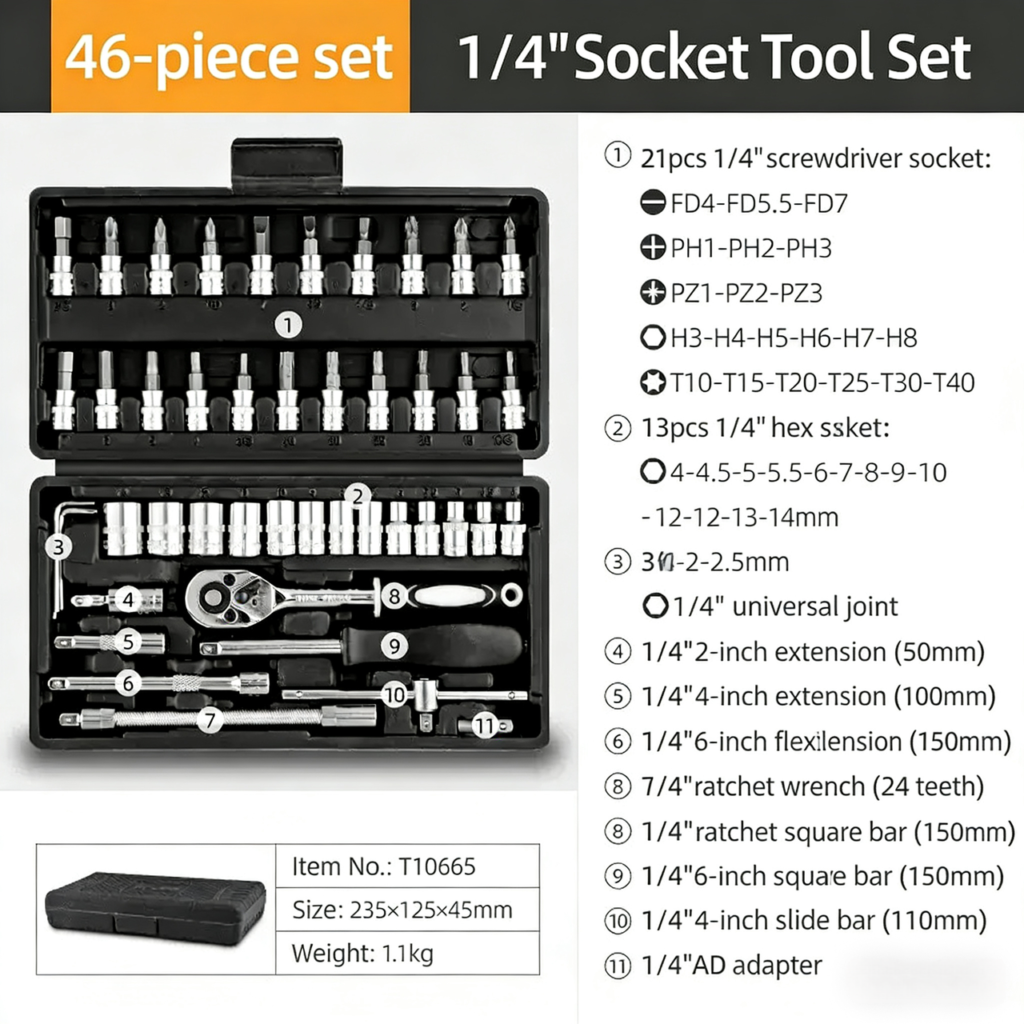
A ratchet wrench is designed to make fastening and loosening jobs faster and easier. However, when the ratchet starts slipping or skipping under load, it can reduce efficiency and may even damage the fastener or tool.
Why does a ratchet wrench slip?
In most cases, the problem is related to the ratchet mechanism, gear teeth, socket fit, excessive load, or improper maintenance. Here are seven common causes and practical solutions.
1. Worn or Damaged Gear Teeth
The ratchet mechanism depends on precisely machined gear teeth and a pawl to transfer torque. After long-term use, the teeth can become worn, rounded, or damaged.
When the gear teeth can no longer engage properly with the pawl, the ratchet may skip or slip when force is applied.
Solution:
Inspect the gear and pawl regularly. Replace worn internal components or use a new ratchet when the mechanism is significantly damaged.
2. Applying Too Much Torque
Every ratchet wrench has a maximum torque capacity. Applying excessive force—especially with a cheater bar or extension pipe—can overload the mechanism.
This can cause the teeth or pawl to deform or break.
Solution:
Choose a ratchet with an appropriate drive size and torque capacity. For high-torque applications, use a suitable breaker bar or torque wrench instead of forcing a standard ratchet.
3. Poor-Quality or Incorrect Socket Fit
A socket that does not properly match the fastener can cause slipping. Worn sockets, incorrect sizes, or low-quality socket profiles may allow the socket to move on the fastener.
This can lead to rounded bolts and reduced working efficiency.
Solution:
Always select the correct socket size and use high-quality sockets with a precise fit. For automotive repair, thin-wall or deep sockets may also be required for specific applications.
4. Incorrect Ratchet Direction
Some ratchets use a direction selector to switch between tightening and loosening. If the selector is not fully engaged, the internal pawl may not lock correctly into the gear.
The result can be unexpected slipping when torque is applied.
Solution:
Before applying force, make sure the direction selector is completely engaged in the required position. Avoid changing direction while the tool is under heavy load.
5. Dirt, Rust, or Contamination Inside the Mechanism
Dust, metal particles, grease buildup, and rust can affect the movement of the pawl and gear.
If the pawl cannot move freely, it may not fully engage with the gear teeth, increasing the risk of skipping.
Solution:
Clean the ratchet mechanism periodically. Remove dirt and old grease, inspect the internal parts, and apply a suitable amount of quality lubricant.
6. Using the Wrong Drive Size
A small 1/4-inch ratchet is designed for lighter-duty applications, while 3/8-inch and 1/2-inch ratchets are commonly used for higher torque requirements.
Using a small ratchet for a high-torque application can put excessive stress on the mechanism.
Solution:
Choose the drive size according to the application:
- 1/4″ – small fasteners and light-duty work
- 3/8″ – general automotive and mechanical repair
- 1/2″ – larger fasteners and higher-torque applications
Choosing the correct drive size helps improve both tool life and working safety.
7. Low-Quality Ratchet Mechanism
Not all ratchets are manufactured to the same standard. Poor gear machining, weak materials, insufficient heat treatment, or inconsistent assembly can cause premature slipping.
For professional users and tool distributors, mechanism quality is especially important because reliability directly affects user experience and product reputation.
Solution:
Look for ratchets manufactured with precise gear machining, appropriate heat treatment, durable materials, and reliable quality control.
A 72-tooth ratchet mechanism, for example, provides a smaller swing angle of around 5°, making it particularly useful when working in tight spaces.
How to Prevent Ratchet Wrench Slipping
Regular maintenance and correct tool selection can significantly reduce slipping problems.
Here are some simple practices:
- Use the correct socket size.
- Select the appropriate ratchet drive size.
- Do not exceed the recommended torque.
- Keep the ratchet mechanism clean and lubricated.
- Check the gear and pawl for wear.
- Avoid using a ratchet as a substitute for a breaker bar.
- Replace damaged or excessively worn components.
Choose the Right Ratchet for Reliable Performance
A ratchet wrench is more than just a handle and gear. The quality of the gear teeth, pawl, material, heat treatment, machining precision, and assembly all influence its performance.
For automotive repair and professional applications, a precision-manufactured ratchet can provide smoother operation, better durability, and more reliable torque transmission.
If you are sourcing ratchet wrenches or socket tool sets for wholesale, distribution, or private-label projects, choosing a manufacturer with consistent production and quality control is an important part of building a reliable product line.
DOPSIGEN focuses on ratchet wrenches and socket tools for professional and automotive applications, offering products designed for reliable performance in demanding working environments.
Leave a Reply