
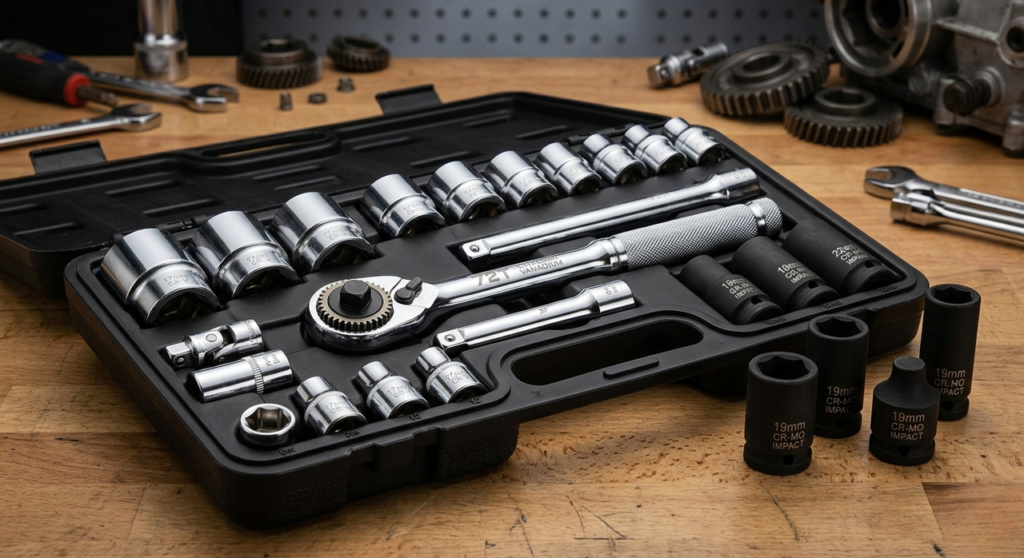
When choosing a ratchet wrench, one of the most common questions is:
What is the difference between a 72-tooth and a 36-tooth ratchet?
The main difference is the swing angle.
A 36-tooth ratchet typically has a swing angle of about 10°, while a 72-tooth ratchet reduces this to about 5°.
That small difference can make a big difference when working in tight spaces.
36-Tooth vs. 72-Tooth: The Basic Difference
The tooth count refers to the number of teeth in the ratchet gear.
- 36-tooth ratchet: approximately 10° swing angle
- 72-tooth ratchet: approximately 5° swing angle
The more teeth the ratchet has, the smaller the movement needed to engage the next tooth.
This allows the user to work with less handle movement.
Why Is a 72-Tooth Ratchet Better for Tight Spaces?
In automotive repair, there are many areas where you simply don’t have enough room to move a tool.
For example:
- Engine compartments
- Transmission areas
- Suspension systems
- Brake assemblies
- Recessed bolts
- Narrow spaces around automotive components
With a 36-tooth ratchet, you may need around 10° of movement before the next engagement.
With a 72-tooth ratchet, the movement is approximately 5°.
This means you can operate the ratchet with smaller movements and more flexibility.
For professional mechanics, this can make repetitive work faster and more comfortable.
Is a 72-Tooth Ratchet Stronger?
Not necessarily.
Tooth count does not determine the overall strength of a ratchet.
Other factors are also important, including:
- Material
- Gear design
- Heat treatment
- Pawl design
- Manufacturing precision
- Torque testing
A well-designed 72-tooth ratchet can provide both smooth operation and high torque performance.
Therefore, buyers should look at the complete ratchet mechanism instead of focusing only on the number of teeth.
72-Tooth vs. 36-Tooth Ratchet: Quick Comparison
| Feature | 36-Tooth | 72-Tooth |
|---|---|---|
| Swing angle | About 10° | About 5° |
| Tight spaces | Good | Excellent |
| Handle movement | More | Less |
| Fine positioning | Good | Better |
| Automotive repair | Suitable | Highly suitable |
What Should You Look for in a Professional Ratchet?
If you are buying ratchet wrenches for professional use, quality is more important than tooth count alone.
Look for:
CR-V Steel
Good material provides a strong foundation for durability.
Precision Gear Mechanism
Accurate gear and pawl engagement helps provide smooth operation.
Proper Heat Treatment
Heat treatment affects hardness, strength and wear resistance.
Reliable Quality Control
Torque testing and inspection help ensure consistent product performance.
Which One Should You Choose?
A 36-tooth ratchet can be a good choice for general-purpose work, especially when there is plenty of working space.
A 72-tooth ratchet is a better choice when you frequently work in tight automotive spaces and need a smaller swing angle.
For professional automotive repair, the 72-tooth design provides greater flexibility and efficiency.
Conclusion
The key difference between a 36-tooth and 72-tooth ratchet wrench is the swing angle.
36 teeth = approximately 10°
72 teeth = approximately 5°
The smaller swing angle of a 72-tooth ratchet makes it especially useful for automotive repair and other applications where working space is limited.
However, a good ratchet is more than just the number of teeth. Material, heat treatment, gear precision and quality control all play an important role.
Looking for a 72-tooth ratchet wrench supplier or OEM manufacturer?
Contact DOPSIGEN for professional ratchet wrenches and socket tools, including OEM and customized solutions.
Leave a Reply