
In the world of hardware, the ratchet wrench is the ultimate symbol of efficiency. Whether you are a professional technician in an auto repair shop or a passionate DIY enthusiast at home, a reliable ratchet wrench can make your work twice as fast with half the effort.
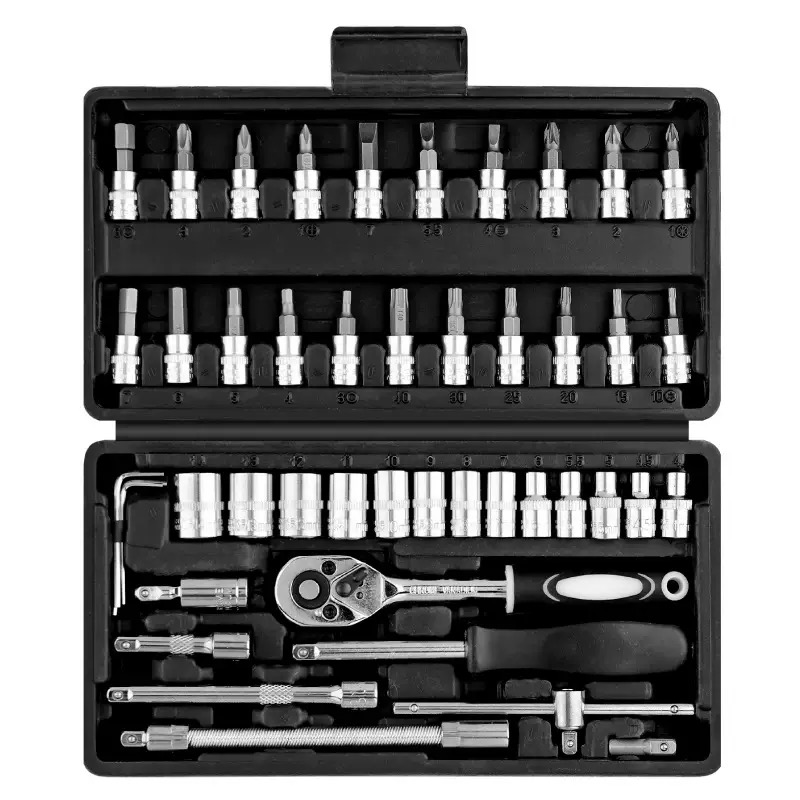
However, many people overlook proper operation and maintenance while enjoying its convenience, leading to frequent tool failures and stripped gears. Today, we will dive deep into how to maximize your ratchet wrench’s efficiency and how to extend its lifespan by up to 5 times through scientific care.
🛠️ Part 1: How to Maximize Your Ratchet Wrench’s Working Efficiency
Understanding how to use your tool efficiently means working smarter, not just harder.
- 1. Choosing the Right Tooth Count is Key
- Low Tooth Count (e.g., 24-Tooth / 36-Tooth): These have a larger swing arc (approx. $10^\circ – 15^\circ$), but each gear tooth is thicker and stronger, making them ideal for high-torque, open-space heavy-duty tasks.
- High Tooth Count (e.g., 72-Tooth / 90-Tooth / 120-Tooth): A 72-tooth ratchet requires a swing arc of only $5^\circ$. In tight engine bays or cramped machinery internals, a high tooth count allows you to quickly fasten or loosen fasteners where space is minimal. Pro Tip: Always match your ratchet’s tooth count to your workspace constraint.
- 2. Leverage Modular Socket Accessories
- Dealing with deeply recessed bolts? Add an extension bar.
- Struggling with an awkward, obstructed angle? Snap on a universal joint.
- Never expect a single ratchet wrench to handle every scenario alone. Modular configuration is the true secret to efficiency.
- 3. Master the “One-Handed Reverse Switch”
- Premium ratchet wrenches (whether lever-style or dial-style) are designed for seamless, one-handed directional switching. Learning to flip the direction blind with your thumb mid-job ensures your workflow remains completely uninterrupted.
⚠️ Part 2: Stop Doing This! The Fatal Mistakes Shortening Your Tool’s Life
Ratchet wrenches are incredibly robust, but they are also precision instruments. The following three high-frequency mistakes are the primary culprits behind stripped gears and broken pawls:
🛑 Mistake #1: Using Your Ratchet to Break Loose Rusted Bolts
The Danger: Stubborn, rusted, or over-tightened bolts require massive initial torque to break free. Forcing a fine-toothed ratchet to handle this sudden shock load can easily snap the internal precision pawls.
The Right Way: Use a combination wrench or a dedicated breaker bar to loosen the bolt for its first full turn, then switch to your ratchet wrench to spin it out rapidly.
🛑 Mistake #2: Slipping a Steel Pipe Over the Handle for Extra Leverage (“Cheater Bars”)
The Danger: Slipping a long metal pipe over your ratchet handle multiplies the applied torque way beyond the tool’s maximum material yield strength. This will permanently warp the ratchet head or shatter the gear mechanism.
The Right Way: Upgrade to a larger drive size (e.g., from 3/8″ to 1/2″) or switch to a heavy-duty, long-handle flexible ratchet.
🛑 Mistake #3: Treating Your Wrench Like a Hammer
The Danger: Using the heavy head of your ratchet wrench to hammer down on a loose bolt or part will send severe shockwaves straight into the internal springs and pawls, instantly shattering them.
The Right Way: Let a hammer do the hammering, and let a wrench do the wrenching.
🧼 Part 3: The Million-Dollar Maintenance Routine (The Secret to a 5X Lifespan)
Most tools don’t wear out; they rust out or jam up due to neglect. Follow this simple routine to keep your ratchet wrench clicking smoothly for generations:
| Maintenance Phase | Frequency | What to Do | Key Benefit |
| Daily Cleaning | After every use | Wipe off oil, grease, sweat, and metal shavings with a clean microfiber cloth. | Prevents the chrome finish from peeling and keeps rust away. |
| Routine Lubrication | Monthly / Quarterly | Apply a few drops of high-quality light machine oil (such as specialized tool oil or sewing machine oil) into the head seams. | Keeps the click crisp and minimizes frictional wear on internal teeth. |
| Deep Clean & Repack | Bi-annually / Annually | Remove the retaining ring, take apart the head, flush out old grimy sludge with solvent, and apply a very thin layer of lithium grease. | Completely removes accumulated metal dust to eliminate slippage. |
Note: Never pack the internal mechanism with thick, heavy automotive chassis grease. In cold weather, thick grease solidifies, preventing the pawl from snapping into place properly, which leads to immediate gear stripping.
🛒 Conclusion: A Wise Craftsperson Invests in Quality Tools
A high-quality ratchet wrench does more than just save you precious time—it delivers that deeply satisfying, crisp “click-click” feedback that makes mechanical work a joy. When sourcing tools for your inventory or garage, avoid sacrificing quality for an abnormally low price. Investing in tools forged from Premium Chrome Vanadium (Cr-V) or Chrome Molybdenum (Cr-Mo) steel is always the most cost-effective decision in the long run.
👉 [Discover Our Professional Grade Ratchet Wrench Collection] — Built for high-intensity daily abuse, featuring precision 72-tooth mechanisms to help you conquer any hardcore mechanical challenge with ease!
Leave a Reply