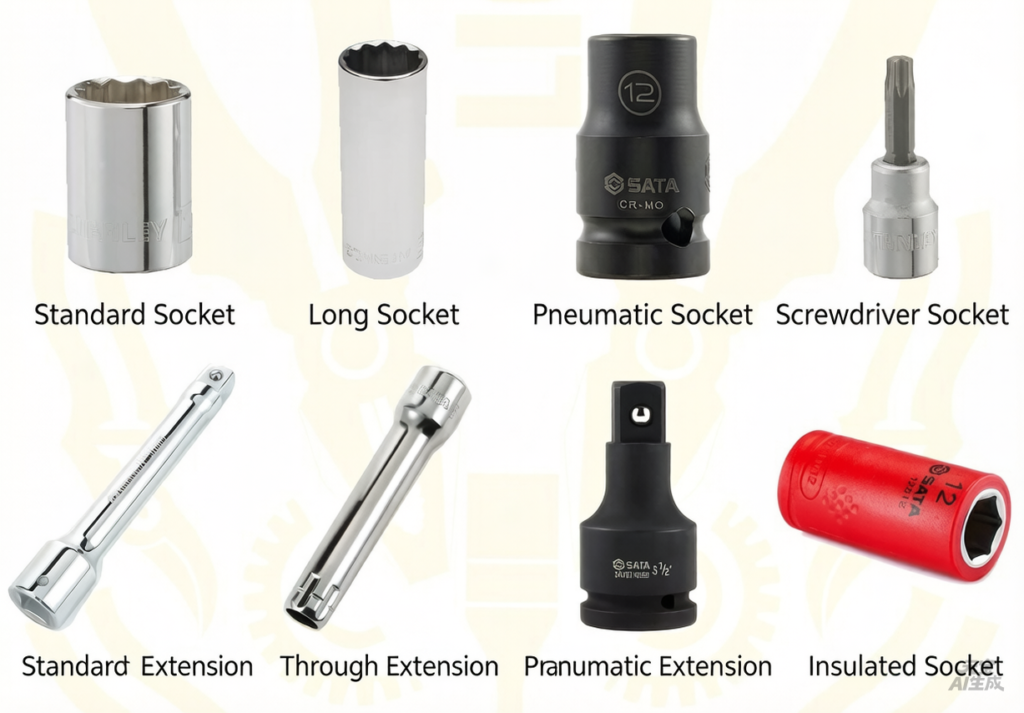
A socket is the abbreviated term for a socket wrench head.
Sockets are divided into two parts: the drive end, which fits onto the drive head of various wrenches, and the working end, which connects to nuts or other rotating workpieces. Due to their cylindrical shape, they are called sockets and are commonly used in automotive repair, assembly, production, and industrial maintenance.
1. Drive End Selection
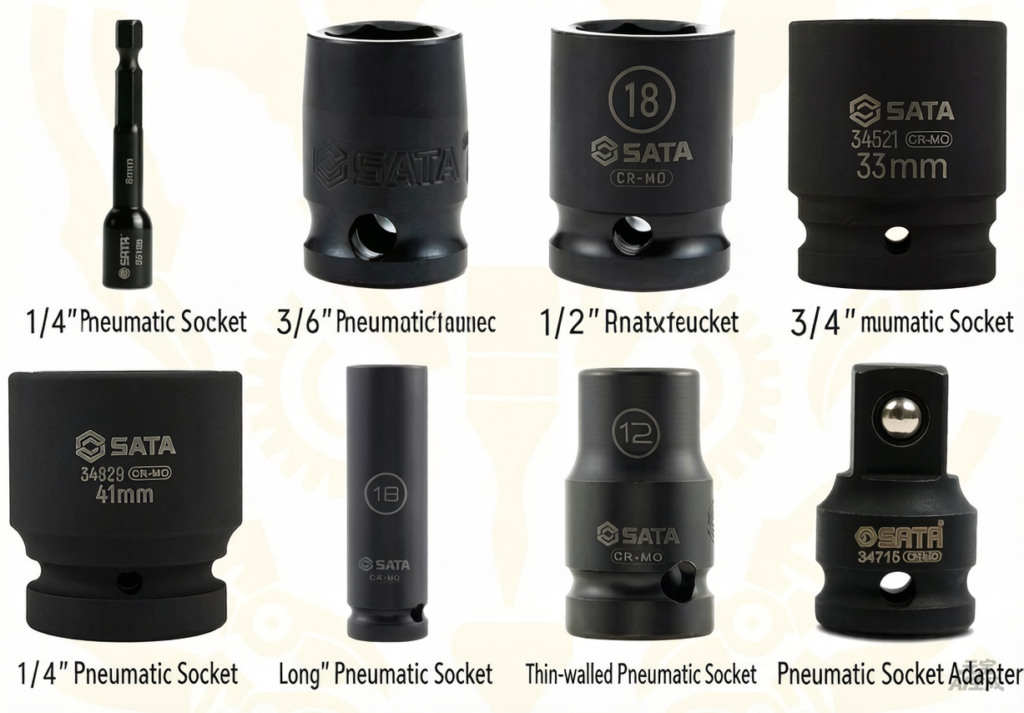
Common drive end square head sizes include 1/4″ (6.3mm), 3/8″ (10mm), 1/2″ (12.5mm), and 3/4″ (19mm). Pneumatic sockets also come in 1″ (25mm) sizes. When selecting a socket, ensure it matches the drive head of the ratchet wrench or use an adapter to share sockets of different sizes.
Note: ” denotes inches, where 1″ equals 25.4mm.
2. Working End Selection
Most sockets have either a 6-point (common, hexagonal) or 12-point (double-hex) shape. They are distinguished by metric and imperial standards, which are not interchangeable. Metric units are in mm (e.g., 16mm), while imperial units are in inches (e.g., 5/16″). Some sockets feature a tapered design for easier insertion and tightening. Adapters or extensions can enable the use of different socket sizes. For electrical work, insulated sockets are required. There is also a screwdriver-type socket called a bit socket, which replaces screwdrivers for loosening or tightening screws.
3. Drive Mechanism Selection
Sockets are categorized into manual and pneumatic types.
- Manual sockets are typically silver in color, made of chrome-vanadium steel (Cr-V) through forging. They are convenient, flexible, and safe for bolt removal, reducing damage to nut edges. However, the correct socket size must be chosen based on workspace and bolt/nut dimensions. They are commonly used with ratchet wrenches or L-shaped socket wrenches.
- Pneumatic (impact) sockets are usually black, made of chrome-molybdenum steel (Cr-Mo) via cold forging, offering superior impact absorption. They are designed for use with pneumatic or hydraulic wrenches in automotive, electrical, and mining repairs. Pneumatic sockets differ from manual sockets in three ways:
- A through-hole on the drive square side for pin retention.
- A groove at the pin hole’s horizontal position for an O-ring (rubber or metal spring) to secure the pin.
- Thicker walls compared to manual sockets.
4. Length Selection
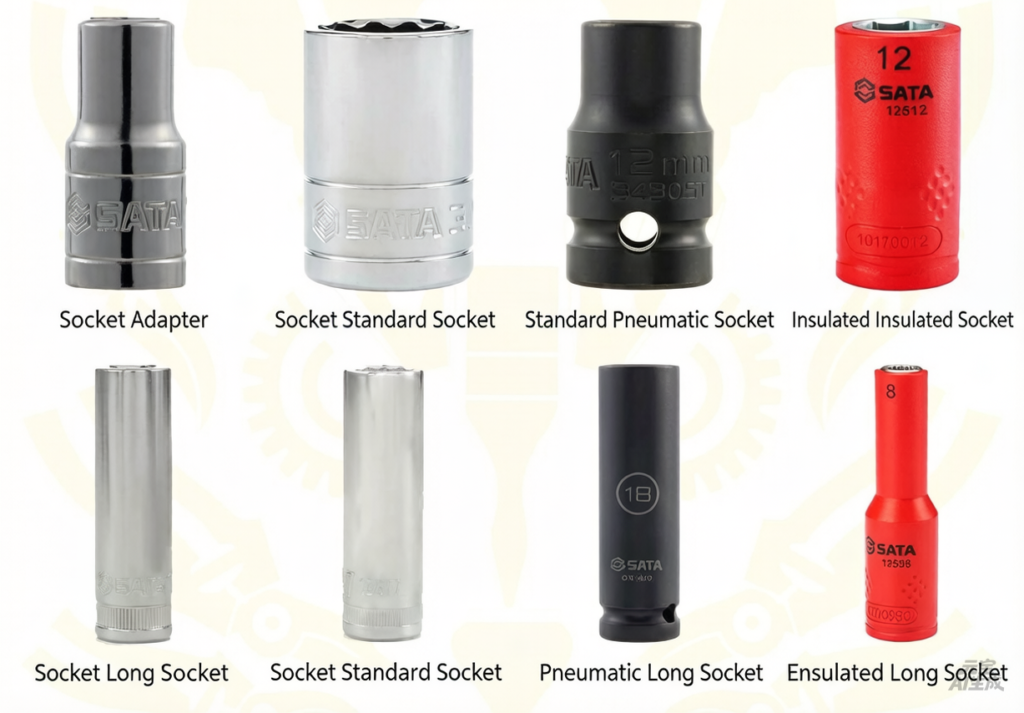
Unless working in tight spaces, longer sockets are recommended for better engagement with nuts on longer studs.
Socket Selection & Usage Notes:
- Choose the appropriate size for the task.
- 6-point sockets last longer than 12-point sockets; discard if cracked or damaged.
- Short sockets suit confined spaces, while long sockets are more versatile.
- Use insulated sockets for electrical work.
- Never substitute manual sockets for pneumatic sockets, though pneumatic sockets can temporarily replace manual ones. Pneumatic sockets are specifically designed for impact wrenches—using manual sockets with impact tools risks cracking due to high-force impacts, potentially causing injury from flying fragments.
In summary, socket wrenches are essential hand tools in factories, auto repair, electrical work, and mining, suitable for various tightening tasks. Selecting the right socket and adhering to proper usage and safety guidelines is crucial.
Leave a Reply