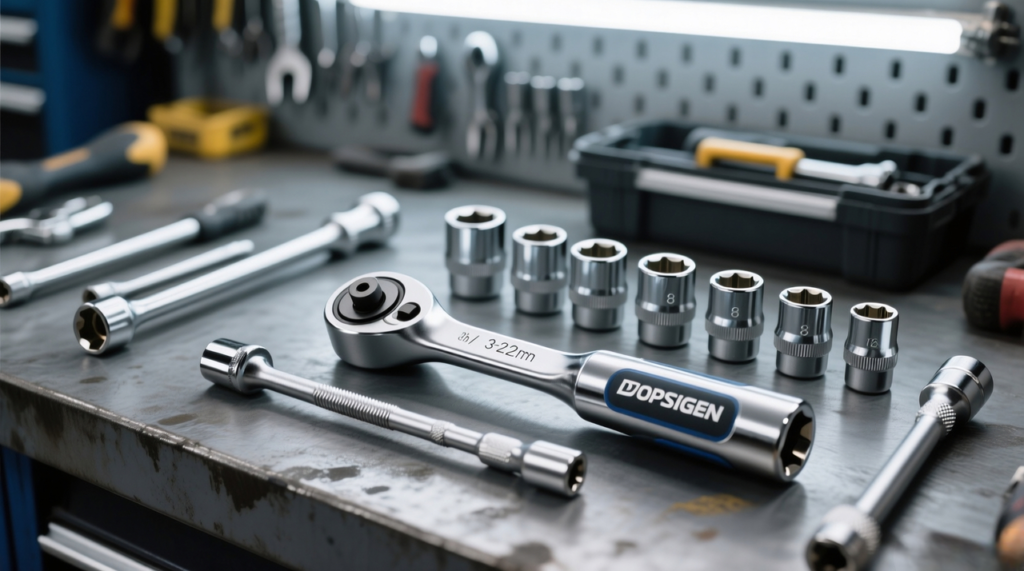
A Complete Guide to Choosing the Right Ratchet Wrench
The ratchet wrench, a seemingly simple tool, is the cornerstone of every auto technician’s and car enthusiast’s toolbox. Its ingenious unidirectional drive mechanism allows for efficient tightening and loosening of bolts and nuts in tight spaces without repeatedly removing and repositioning the tool, significantly boosting productivity. Faced with a dazzling array of brands, models, and specifications on the market, how do you choose a ratchet wrench that is truly ergonomic, durable, and right for you? This article will systematically break down the key factors to help you make an informed decision.
Part 1: Decoding the Core Specifications – Speaking the Tool’s Language
Before purchasing, it’s essential to understand several key parameters; they are the foundation for judging a ratchet wrench’s performance.
· 1. Size & Drive Head: Matching the World of Bolts
· Drive Size: Refers to the square drive size of the wrench, commonly 1/4″, 3/8″, and 1/2″. This determines the range of sockets it can accept.
· 1/4″ Drive: Precise and compact. Ideal for electronics, interior trim, small motorcycles, or small fasteners on cars (typically under 10mm).
· 3/8″ Drive: The universal workhorse for automotive repair. Offers the best balance of strength and flexibility. Extremely versatile, suitable for everything from filters and spark plugs to chassis components and some lug nuts. The first choice and a must-have for most users.
· 1/2″ Drive: Designed for high torque. Used for lug nuts, large suspension components, exhaust clamps, and other high-torque applications.
· Wrench Length: Length is proportional to torque. Short wrenches are for confined spaces; long wrenches provide greater leverage for breaking loose stubborn, rusted fasteners. Many brands offer long or flex-head options for specific scenarios.
· 2. Tooth Count: The Key to Flexibility
The tooth count determines the wrench’s minimum swing arc (Arc = 360° ÷ Tooth Count). A higher tooth count allows for a smaller swing in restricted spaces, making operation more convenient.
· Low Tooth Count (e.g., 72 teeth): 5° arc per tooth. Extremely strong and impact-resistant, suitable for heavy-duty applications.
· High Tooth Count (e.g., 90, 120 teeth or higher): Arc can be 3° or less per tooth, offering unparalleled flexibility. The preferred choice for modern auto repair, especially in engine bay work. Note: Higher tooth gears are more precise and demand superior materials and heat treatment. Choose reliable brands.
· 3. Material & Manufacturing: The Foundation of Durability
· Material: High-end ratchet wrenches typically use Chromium-Vanadium Steel (Cr-V) or Chromium-Molybdenum Steel (Cr-Mo). Chrome-molybdenum steel offers better toughness and superior resistance to impact fatigue, common in professional-grade tools.
· Manufacturing: Heat treatment is crucial for achieving the perfect balance between hardness and toughness in the steel. The finish (e.g., chrome plating, black oxide) affects corrosion resistance and wear.
· 4. Design Details: Enhancing the Experience
· Selector Lever: Should operate smoothly and positively, allowing quick direction changes. A broad or textured lever is easier to use with gloves.
· Head Thickness: A low-profile/slim head can access tighter spaces.
· Handle Design: An ergonomic handle (e.g., dual-material grip, anti-slip texture) reduces fatigue during prolonged use and provides better grip.
· Quick-Release Button: Allows for one-handed socket removal, boosting efficiency during tasks requiring frequent socket changes.
Part 2: Scenario-Based Selection Guide: Finding Your “Perfect Partner”
Your primary role and work context determine the focus:
· Home User / DIY Enthusiast:
· Focus: Value for money, versatility.
· Recommendation: A 3/8″ drive, 72-90 tooth ratchet and socket set (including common sockets and extensions) is sufficient for most basic vehicle maintenance (tire changes, filter replacement, simple disassembly). A reputable mid-range brand is a good choice.
· Professional Auto Technician / Workshop:
· Focus: Efficiency, reliability, professionalism, tool system.
· Recommendation:
1. Primary Tool: 3/8″ drive, high tooth count (90+ teeth) ratchet. Consider having both long and short handles for different spaces.
2. Heavy-Duty Assistant: A 1/2″ drive ratchet or torque wrench for high-torque jobs like lug nuts and suspension work.
3. Precision Partner: A 1/4″ drive precision set for interior trim, sensors, etc.
4. Brand Consideration: Invest in professional/industrial grade brands (e.g., Snap-on, Matco, Mac Tools, or top industrial brands like Hazet, Stahlwille, and high-quality professional brands like GearWrench). They offer superior feel, durability, and warranty/service.
· Motorcycle / Bicycle Repair:
· Focus: Compact size, precision.
· Recommendation: A 1/4″ drive set is core, supplemented by 3/8″ drive for slightly larger fasteners. High tooth count is beneficial for compact engine and frame spaces.
Part 3: Brand & Value Considerations
Market brands can be roughly categorized:
· Top Professional/Industrial Grade: Peak precision, durability, feel, and price. The choice for professionals where efficiency is paramount.
· High-End Professional Grade: Excellent balance of performance, durability, and price. A top choice for many technicians and serious enthusiasts.
· Quality Mid-Range/DIY Grade: Reliable performance and great value, meeting all needs for most home and DIY users.
· Economy/Entry-Level: Highly attractive price, but materials, workmanship, and longevity are often compromised. Suitable for very infrequent use or severely limited budgets.
Advice: Choose the highest quality tool your budget allows. “Buying right once” is often more economical and enjoyable than repeatedly buying inferior tools.
Part 4: Usage & Maintenance Tips
- Don’t Use as a Hammer: Never use a ratchet wrench for striking!
- Don’t Extend the Handle: Avoid using a pipe over the handle for extra leverage, as this can easily damage the ratchet mechanism. Use a larger tool or a proper torque wrench for high-torque applications.
- Clean Regularly: Wipe off grease and dirt after use, especially around the ratchet head.
- Lubricate Periodically: A few drops of dedicated ratchet lubricant or light oil can be added to some models to keep the mechanism smooth.
- Use the Right Accessories: Employ correctly sized and typed sockets, universal joints, and extensions to form a systematic solution.
Conclusion
Choosing the right ratchet wrench is the beginning of a synergy between skill and tool. It’s not just an extension of your hand but a reflection of thought and experience. By understanding the principles, clarifying your needs, and paying attention to details, you can find that reliable partner from the vast array of products—one that will accompany you with confidence and precision as you navigate the mechanical world.
Explore our carefully curated selection of ratchet wrench sets and professional tools. From beginner to expert, we have the perfect tool to meet all your demands for quality, efficiency, and value.
Leave a Reply