canon@dopsigen.com

News

  • From beginners to automotive repair experts

    From the metallurgical furnace to the maintenance bench, witness the high-performance craftsmanship of CR-V materials.

    [Opening: The Value Belief of a Piece of Steel]

    In the world of hardware tools, material is the soul and craftsmanship is the flesh and blood. We firmly believe that a truly handy ratchet wrench should not merely be cold metal, but a balance of power and precision. For this reason, we delve into the upstream, carefully selecting chromium vanadium steel (CR-V) – the “evergreen” of alloy steels – and through rigorous multi-process chains, forge it into the efficient, durable and reliable ratchet wrenches and socket series in your hands.

    【Core Process: Three Key Elements of Quenching】

    We don’t merely purchase steel; instead, we endow tools with “life” through the following processes:

    Precision Forging: Reshaping the Framework of Power

    · Process: Precision hot forging or cold forging process is adopted. The chromium-vanadium steel at high temperature is instantly shaped by a ten-thousand-ton press, with the metal grain flow lines fully retained, eliminating porosity and looseness.
    · Value: Compared with castings, the forged wrench body has a higher density, and its impact resistance and fracture resistance are significantly enhanced.

    1. Heat Treatment: The Wisdom of Combining Hardness and Softness

    · Process: Through multi-stage controllable atmosphere heat treatment furnaces, the quenching and tempering temperatures are precisely controlled (with an accuracy of ±5℃). The carbides of chromium and vanadium elements are fully dissolved and uniformly precipitated.
    · Value: Ensuring the hardness reaches HRC 42-48 (for the wrench body) and HRC 48-56 (for the working end of the socket). It is hard but not brittle, tough but not soft, preventing slippage and buffering the peak torque in an instant.

    1. Precision Machining: Micron-level Meshing

    · Process: High-precision CNC milling and profile grinding. The ratchet gear adopts a dual-density design of 72 teeth/90 teeth, matching the 12-angle or 6-angle Star drive force structure of the socket.
    · Value: Only a 5° swing angle is required to drive (72 teeth). The socket fits tightly with the fastener, with uniform force distribution, completely eliminating the problem of “slipping angles” and damaging the screws.

    【Material Highlight: Why Chromium Vanadium Steel?】

    · Wear resistance: The chromium element enhances hardenability and corrosion resistance. Even when dealing with rusted bolts, the surface chrome plating remains firm.
    · Fatigue resistance: The vanadium element refines the grain structure. Even after thousands of cycles of loading, the internal structure remains stable and is less prone to micro-cracks.
    · Cost-effectiveness: Striking a balance between high-end performance (such as some properties of chrome-molybdenum steel) and economy, chrome-vanadium steel is the gold standard for professional hand tools.

    【Final Product Testing: Three Checks Before Delivery】

    Each ratchet wrench and socket must pass through the following before packaging:

    1. Torque failure test: Reaching a safety factor of 1.5 times the ANSI/ASME and DIN standards.
    2. Ratchet fatigue test: Running continuously for 72 hours in both forward and reverse directions under load, the gear meshing remains precise.
    3. Coating adhesion test: In a salt spray environment, the chromium layer shows no peeling or red rust.

    【Conclusion and Call to Action】

    We no longer merely talk about “durability and sturdiness”, but have transformed every process of smelting, forging, heat treatment and precision processing of chromium-vanadium steel into a smooth operation experience in your hands.

    Whether you are a professional technician or a hardcore DIY enthusiast:
    👉 Get our chrome vanadium steel ratchet socket set right now
    👉 Enjoy the service of “lifetime rust and breakage free replacement”
  • From beginners to automotive repair experts

    Carbon Steel: “CS” is the designation for carbon steel, formed by the initial letters of the English words. Carbon steel is an iron-carbon alloy; it is also referred to simply as “carbon steel.” Typically, it also contains small amounts of silicon, manganese, sulfur, and phosphorus. Generally, the higher the carbon content in carbon steel, the greater its hardness and strength, though its ductility is correspondingly lower. Based on carbon content levels, carbon steel is classified into high-, medium-, and low-carbon grades; as the carbon content increases, hardness rises while toughness decreases. High-carbon steel is typically used for manufacturing tools due to its high hardness and strength; however, because it lacks toughness, it is generally unsuitable for applications such as screwdrivers (as it is prone to chipping or cracking), yet it is widely utilized as a material for various general-purpose tools, such as wrenches.

    Chromium-Vanadium Steel: Cr-V chromium-vanadium steel is an alloy tool steel enriched with the alloying elements chromium (Cr) and vanadium (V). Its combination of strength and toughness surpasses that of carbon steel, making it an ideal material for manufacturing high-quality tools. It is commonly used in the production of pliers, wrenches, and screwdrivers; manual sockets, in particular, are typically manufactured using 50BV30 chromium-vanadium steel. The primary distinction between chromium-vanadium steel and carbon steel lies in their hardness: after heat treatment, chromium-vanadium steel achieves a hardness of 60 HRC (Rockwell Hardness) or higher. In contrast, the maximum hardness attainable by medium-carbon steel is approximately 55 HRC (538 HB). Furthermore, under specific operating conditions, chromium-vanadium steel exhibits excellent wear resistance, offering superior mechanical properties and greater chemical stability compared to ordinary carbon steel.

    Chromium-Molybdenum Steel: Cr-Mo is an alloy composed of chromium (Cr), molybdenum (Mo), iron (Fe), and carbon (C). It exhibits excellent impact resistance, outstanding strength and toughness, and high resistance to elevated temperatures and pressures; overall, its performance surpasses that of chromium-vanadium steel. It is ideally suited for the manufacture of premium screwdrivers and small hex wrenches. While pneumatic sockets are typically made from 35CrMo chromium-molybdenum steel, this material is relatively expensive.

    S2 tool steel is an alloy composed of carbon (C), silicon (Si), manganese (Mn), chromium (Cr), molybdenum (Mo), and vanadium (V). It is an exceptional impact-resistant tool steel, distinguished by its superior strength and toughness; consequently, it is widely used in the manufacture of high-strength tools such as screwdrivers and hex keys. While its overall performance surpasses that of chromium-vanadium steel, its practical application in material selection is not as widespread—primarily because it is an imported material. Relatively speaking, S2 tool steel is a superior material choice compared to chromium-vanadium steel. This is because, in actual use—particularly with tools like screwdrivers—the primary issue encountered is tip wear, which leads to “cam-out” (slipping) when tightening screws. The occurrence of such wear and material loss indicates a critical need to enhance the strength of the tool tip—specifically, by ensuring it possesses a relatively higher level of hardness. The typical post-heat-treatment hardness range for S2 steel is HRC 58–62, whereas that of chromium-vanadium steel is HRC 48–52. Both the vanadium and molybdenum content in S2 steel exceed those found in chromium-vanadium steel; as a result, S2 steel demonstrates superior strength and toughness compared to the latter. A higher vanadium content correlates with enhanced toughness, while a higher molybdenum content contributes to greater hardness and strength. Collectively, these characteristics demonstrate that S2 steel is a highly effective material for screwdrivers, offering superior strength and exceptional durability.

  • From beginners to automotive repair experts


    1. Carbon steel
    · Composition: Iron + Carbon, with no or extremely trace amounts of alloying elements
    · Advantages: Lowest cost, easy to process
    · Disadvantages: Hardness and toughness cannot be achieved simultaneously; hard and brittle or soft and tough; poor rust resistance
    · Applications: Home DIY, disposable tools, low-end wholesale by weight
    · Identification: The surface is usually blackened, and chrome plating is also prone to rusting

    2. Chromium-vanadium steel (Cr-V)
    · Composition: Added chromium (Cr) to enhance hardness and rust resistance, and vanadium (V) to refine grain structure and improve toughness.
    · Advantages: Offers the best cost-performance ratio, balanced overall performance, and is the most mainstream in the tool industry.
    · Disadvantages: Has lower impact resistance than Cr-Mo and may break when used in impact wrenches.
    · Applications: Commonly used in auto repair shops, sockets, wrenches, and extension rods.
    · Identification: Surface chrome-plated, often marked with “Cr-V” or “Chrome Vanadium”.

    3. Chromium-molybdenum steel (Cr-Mo)
    · Composition: Added chromium (Cr) and molybdenum (Mo), molybdenum can enhance high-temperature strength and impact resistance.
    · Advantages: Excellent toughness, good impact resistance, deforms before breaking under high torque (high safety).
    · Disadvantages: Cost is higher than Cr-V, hardness is slightly lower than S2.
    · Applications: Pneumatic impact wrench sockets, heavy-duty tools, industrial-grade scenarios.
    · Identification: The surface is often treated with matte or black electrophoresis, and marked with “Cr-Mo” or “Chrome Molybdenum”.

    4. S2 steel
    · Composition: Silicon (Si) enhances the elastic limit, molybdenum (Mo) + vanadium (V) refines the grain structure, and has a high carbon content.
    · Advantages: Highest hardness (HRC 58±), excellent wear resistance, and strong torque capacity.
    · Disadvantages: Highest cost, and slightly lower toughness than Cr-Mo (too hard and brittle).
    · Applications: Screwdriver bits, Allen wrenches, and high-torque small-sized tools.
    · Identification: The surface is often sandblasted or matte-finished, and marked with “S2” or “S2 Steel”.

  • From beginners to automotive repair experts

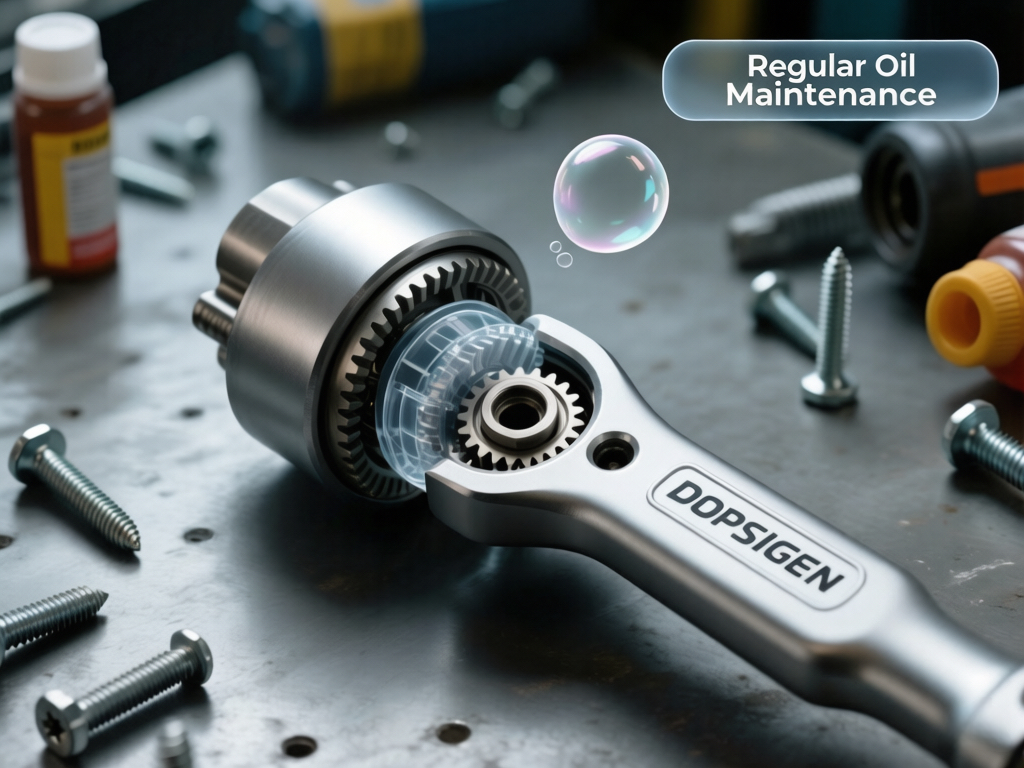
    In daily work, pneumatic ratchet wrenches are our reliable assistants. However, neglecting regular cleaning and maintenance is like overburdening a diligent worker, which may eventually lead to “exhaustion,” affecting work efficiency or even causing an early “retirement.” So, how can we scientifically and effectively maintain a pneumatic ratchet wrench? Here are a few maintenance tips to help you easily care for this “silent comrade.”

    Regular “refueling” and “detox” without disassembly for easy maintenance: For non-professional repair personnel, avoid self-disassembling the wrench to prevent affecting its precision. Simply connect the wrench to the air pump interface, drip an appropriate amount of pneumatic lubricating oil, and intermittently press the trigger to ensure the oil fully penetrates the wrench interior. Then connect the air pump and alternately operate the wrench forward and backward to expel accumulated dust and impurities with the airflow. This process can be repeated several times until the wrench interior is clean as new.

    Appearance neat and performance stable: Keep the wrench’s exterior clean to avoid oil and dust accumulation affecting operation. Regularly add lubricating oil to the three-point control valve to reduce wear and ensure smooth valve operation. At the same time, pay attention to regularly draining accumulated water in the control valve to prevent moisture from corroding components.

    Filter cotton should be cleaned frequently, and internal maintenance should not be neglected: The air outlet filter cotton of the ratchet wrench body should be cleaned twice every two weeks to prevent clogging and affecting airflow. For the internal part of the wrench body, it is recommended to perform in-depth maintenance at least every six months. If fine maintenance of the transmission part is required, it is recommended to entrust it to professionals to avoid a decrease in precision due to improper disassembly.

    Calibration check: Ensure the “status online” by regularly calibrating the pressure gauge to guarantee accurate readings that match the actual pressure. Simultaneously, verify that the relationship between pressure and torque meets work requirements, ensuring stable torque output from the wrench and precise operation results.

    Comprehensive maintenance to enhance “work efficiency”: Just as humans need healthcare to maintain high productivity, pneumatic ratchet wrenches also require thorough and regular maintenance to extend their service life and improve work efficiency. By following the above maintenance steps, you can not only effectively prevent malfunctions but also significantly reduce repair costs, ensuring the wrench remains in optimal working condition to safeguard your production tasks.

    To sum up, careful maintenance of pneumatic ratchet wrenches not only ensures their optimal performance but also significantly extends their service life, helping to make your production operations more efficient and smooth. Choose DOPSIGEN and let professional pneumatic tools become your powerful “weapon,” together opening a new chapter of efficient operations.

  • From beginners to automotive repair experts

    Socket refers to the abbreviation of socket wrench. Because it is placed over various wrenches and is shaped like a cylinder, it is commonly known as a socket. It is a commonly used tool for production, maintenance, and daily life.

    A socket wrench consists of multiple sockets with hexagonal or dodecagonal holes, along with various accessories such as handles and extension rods. It is particularly suitable for tightening or loosening bolts or nuts in very tight or deeply recessed spaces.

    The characteristics of the sleeve:

    1. Made of international No. 45 steel with special manufacturing processes, ensuring high dimensional accuracy and reliable quality.
    2. Can connect HRB335 and HRB400 grade ribbed steel bars with diameters ranging from Ф16 to Ф40mm.
    3. Tested by the National Construction Engineering Quality Supervision and Inspection Center, meeting the Grade I joint standard in JGJ107-2003.
    4. Available in three major series (standard type, reverse thread type, and reducing type) with fifty-two varieties, capable of meeting the connection requirements for same-diameter, reducing-diameter, adjustable-length, and directional steel bars in horizontal, vertical, and inclined positions of building structures.

    How to distinguish good and bad sockets
    (1) Check the surface: Whether there are burrs, whether the specifications meet size standards, and whether there are scratches, etc.
    (2) Internal quality: Use special tools to measure torque and hardness; measure size; conduct salt spray tests, etc.
    Note: When the hexagonal or double-hexagonal across-flats size of the socket wrench is ≤32mm, its hardness value should not be lower than HRC39; when >32mm, the hardness should not be lower than HRC35.

    Classification of Sockets

    Classification by driving device:

    1. Pneumatic socket (also known as air-powered socket)
    2. Manual socket
    3. Electric socket: A socket driven by an electric wrench.

    Classification by Material

    1.Chrome-Molybdenum Steel (Cr-Mo Steel) is an alloy of chromium (Cr), molybdenum (Mo), iron (Fe), and carbon (C). It offers excellent high-temperature processing performance, aesthetic appearance after processing, deep hardenability, and good impact absorption, making it commonly used in the industry for manufacturing pneumatic tools and large manual tools.

    1. Chrome-Vanadium Steel (Cr-V Steel) is an alloy tool steel with added chromium and vanadium elements, primarily used in manual tools.
    2. 45# Carbon Steel, also known as No. 45 steel, has a carbon content of about 0.45%. Due to its good machinability and versatile processing techniques, it is a commonly used material in steel processing. Among the above materials, Cr-Mo (Chrome-Molybdenum Steel) is the material used for sockets.

  • From beginners to automotive repair experts

    A socket is the abbreviated term for a socket wrench head.

    Sockets are divided into two parts: the drive end, which fits onto the drive head of various wrenches, and the working end, which connects to nuts or other rotating workpieces. Due to their cylindrical shape, they are called sockets and are commonly used in automotive repair, assembly, production, and industrial maintenance.

    1. Drive End Selection

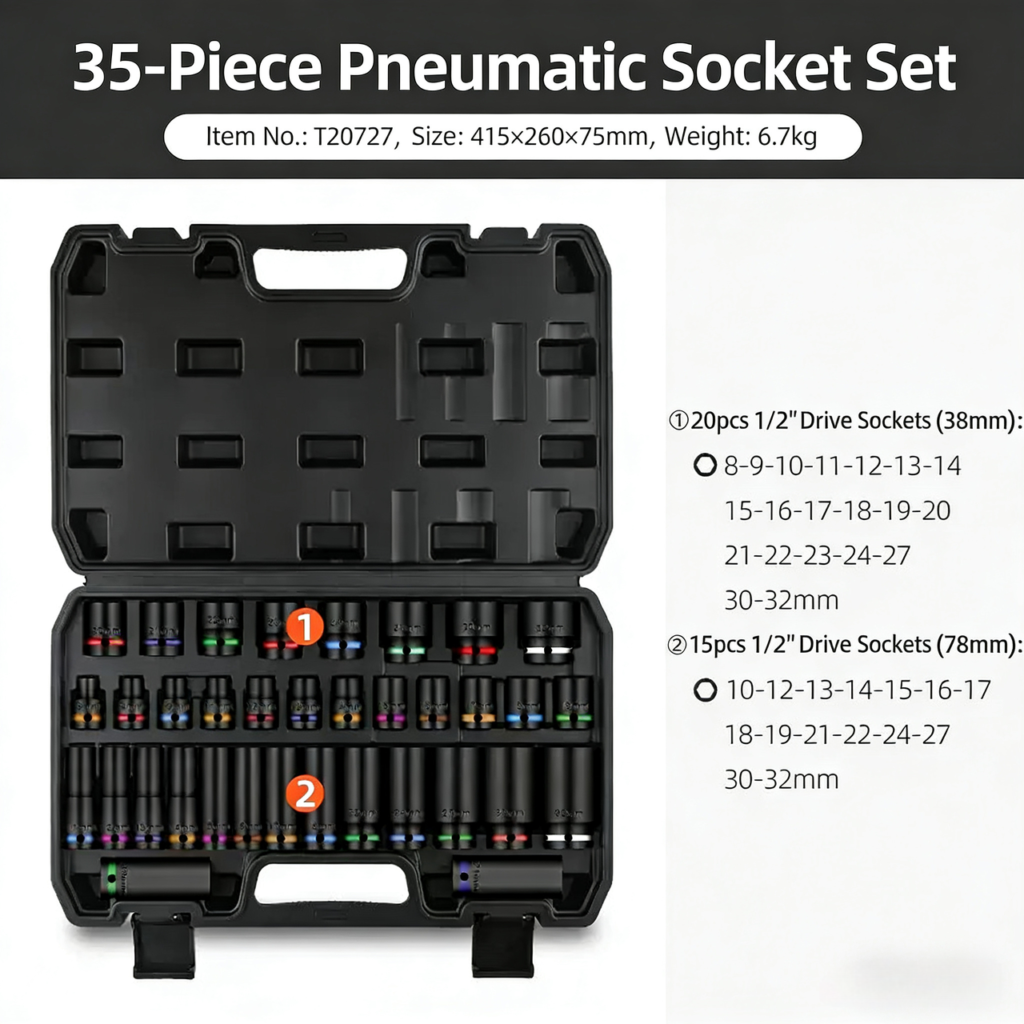
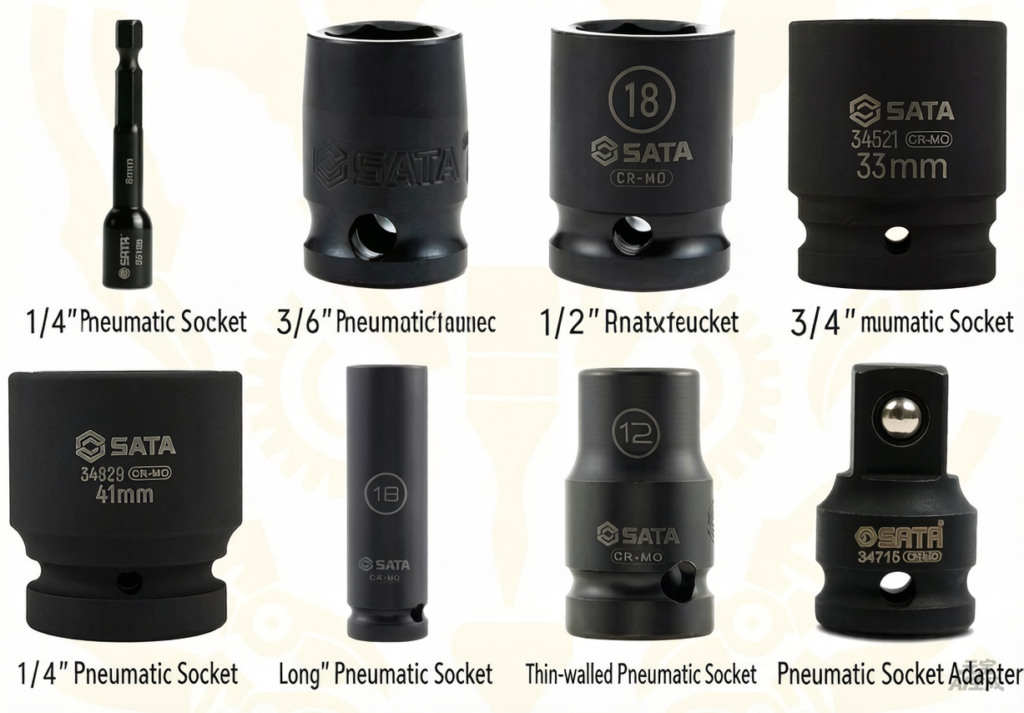
    Common drive end square head sizes include 1/4″ (6.3mm), 3/8″ (10mm), 1/2″ (12.5mm), and 3/4″ (19mm). Pneumatic sockets also come in 1″ (25mm) sizes. When selecting a socket, ensure it matches the drive head of the ratchet wrench or use an adapter to share sockets of different sizes.
    Note: ” denotes inches, where 1″ equals 25.4mm.

    2. Working End Selection

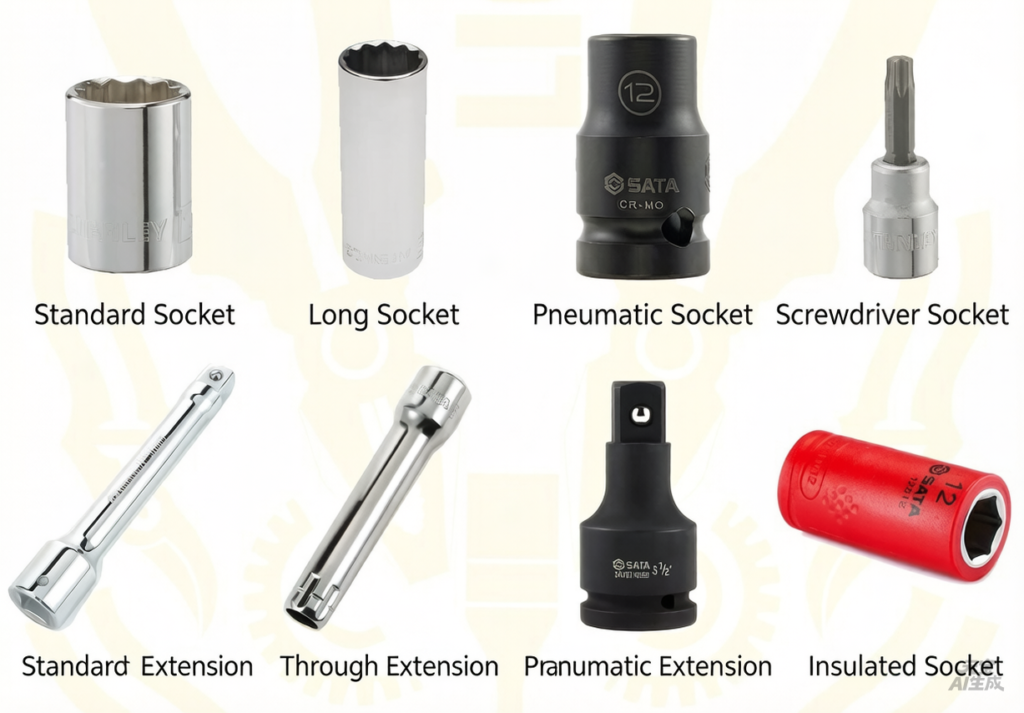
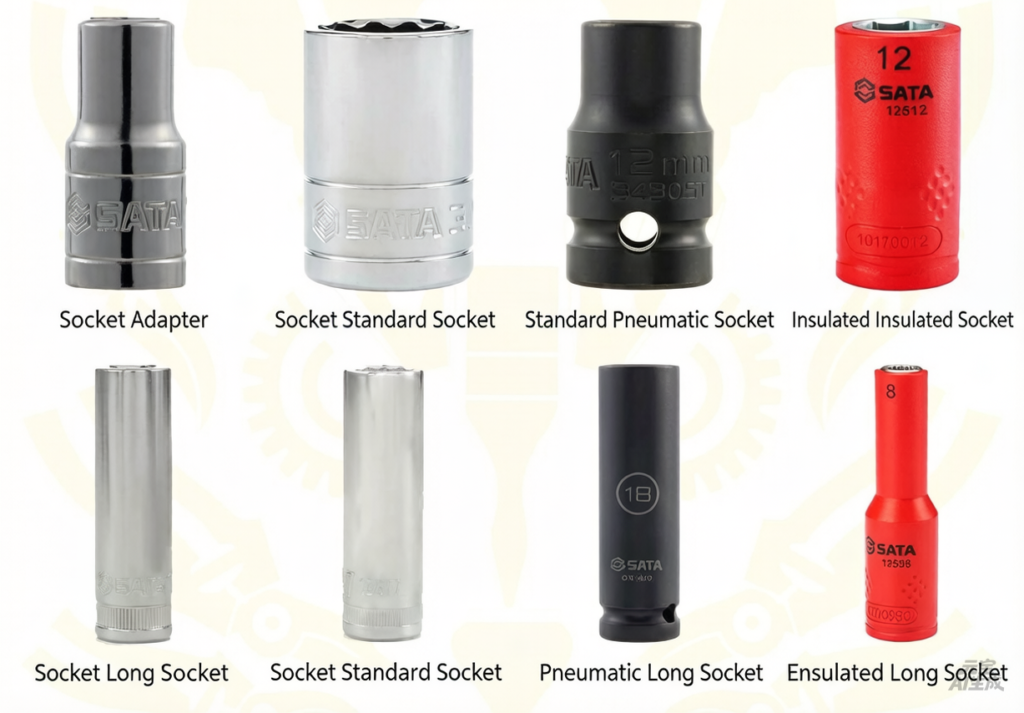
    Most sockets have either a 6-point (common, hexagonal) or 12-point (double-hex) shape. They are distinguished by metric and imperial standards, which are not interchangeable. Metric units are in mm (e.g., 16mm), while imperial units are in inches (e.g., 5/16″). Some sockets feature a tapered design for easier insertion and tightening. Adapters or extensions can enable the use of different socket sizes. For electrical work, insulated sockets are required. There is also a screwdriver-type socket called a bit socket, which replaces screwdrivers for loosening or tightening screws.

    3. Drive Mechanism Selection

    Sockets are categorized into manual and pneumatic types.

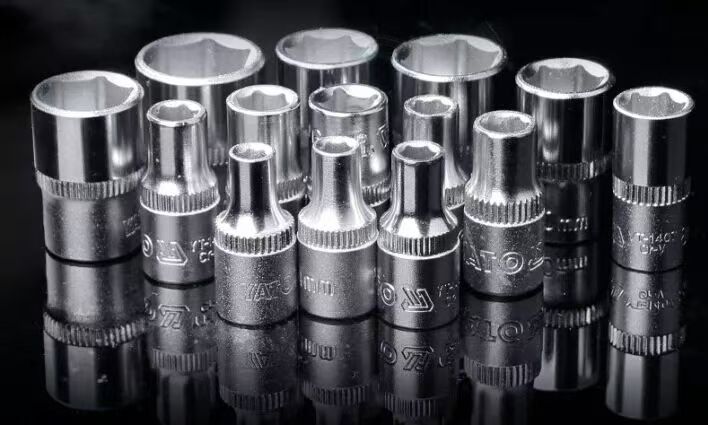
    • Manual sockets are typically silver in color, made of chrome-vanadium steel (Cr-V) through forging. They are convenient, flexible, and safe for bolt removal, reducing damage to nut edges. However, the correct socket size must be chosen based on workspace and bolt/nut dimensions. They are commonly used with ratchet wrenches or L-shaped socket wrenches.
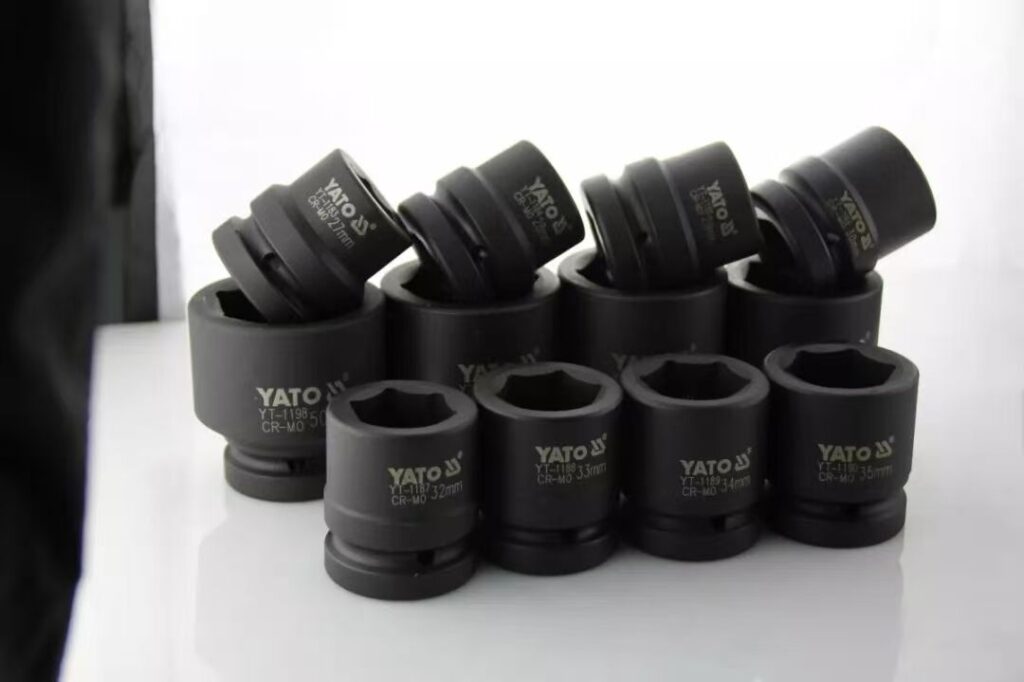
    • Pneumatic (impact) sockets are usually black, made of chrome-molybdenum steel (Cr-Mo) via cold forging, offering superior impact absorption. They are designed for use with pneumatic or hydraulic wrenches in automotive, electrical, and mining repairs. Pneumatic sockets differ from manual sockets in three ways:
    1. A through-hole on the drive square side for pin retention.
    2. A groove at the pin hole’s horizontal position for an O-ring (rubber or metal spring) to secure the pin.
    3. Thicker walls compared to manual sockets.

    4. Length Selection

    Unless working in tight spaces, longer sockets are recommended for better engagement with nuts on longer studs.

    Socket Selection & Usage Notes:

    1. Choose the appropriate size for the task.
    2. 6-point sockets last longer than 12-point sockets; discard if cracked or damaged.
    3. Short sockets suit confined spaces, while long sockets are more versatile.
    4. Use insulated sockets for electrical work.
    5. Never substitute manual sockets for pneumatic sockets, though pneumatic sockets can temporarily replace manual ones. Pneumatic sockets are specifically designed for impact wrenches—using manual sockets with impact tools risks cracking due to high-force impacts, potentially causing injury from flying fragments.

    In summary, socket wrenches are essential hand tools in factories, auto repair, electrical work, and mining, suitable for various tightening tasks. Selecting the right socket and adhering to proper usage and safety guidelines is crucial.

  • From beginners to automotive repair experts

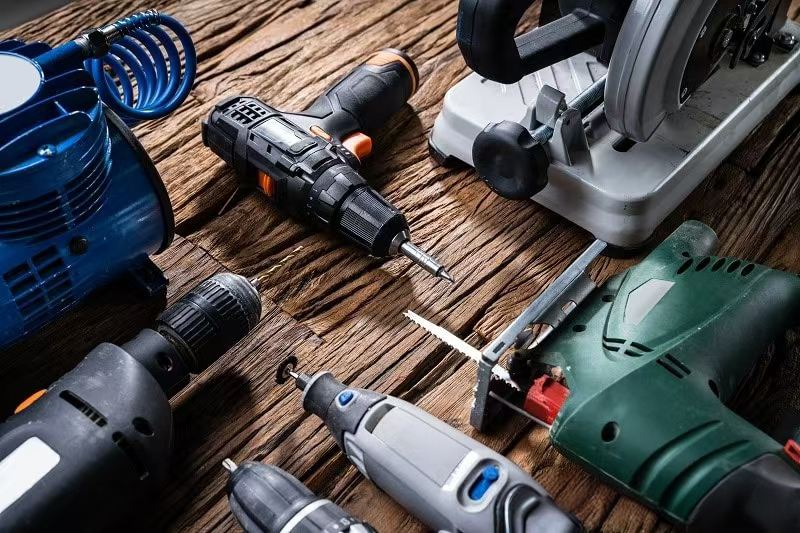
    The global market size of power tools reached 28.56 billion US dollars in 2024. It is expected to grow from 29.69 billion US dollars in 2025 to 40.95 billion US dollars in 2032, with a compound annual growth rate (CAGR) of 4.7% during the forecast period.

    Divided into “lithium battery type and non-lithium battery type”, the global lithium battery penetration rate of power tools was approximately 65.6% in 2024. Among them, the lithium battery penetration rate of industrial power tools was about 51.6%, that of professional power tools was about 62.2%, and that of general power tools was about 80.1%.

    The continuous increase in residential and commercial infrastructure investment and the rise in global new home sales have directly driven the demand for power tools. The increasing penetration rate of cordless tools and battery-powered tools, along with the integration of Internet of Things (IoT) technology, has further accelerated market expansion.
    Technological advancements have created new growth points in the industry. In recent years, several technological breakthroughs have driven the penetration rate of power tools to soar, some of which are as follows:


    Progress in the technical dimension and its impact: Brushless motor upgrade, torque increased to 250Nm+ (such as Milwaukee M18 FUEL crimping tool), comparable to hydraulic tools, meeting the crimping requirements of φ100mm copper tubes; High-density batteries, the popularization of 21700/4680 cells, 12Ah battery packs enabling 8 hours of continuous heavy-duty operation (such as cutting thick-walled stainless steel pipes); Smart control chips, real-time adjustment of output power (overload protection), recording of operation data (crimping pressure value/time stamp), meeting ISO certification requirements; Industrial protection grade IP54 dust and water resistance, 2-meter drop resistance standard, suitable for harsh construction site environments.


    While technological progress significantly improves operational efficiency, users can obtain top-tier functions at more competitive prices. New products reduce downtime and charging time, enhancing productivity. Manufacturers also integrate advanced modes and functions into tools, bringing performance enhancements and flexible configurations, which greatly expands the user base and market development.


    Among them, the popularization of cordless tools, with longer battery life, portability, easy storage, and user-friendly features, has driven dynamic market growth. IoT, sensors, and connectivity upgrades have reshaped the equipment industry; large-scale adoption of automation and intelligent solutions in vertical fields such as construction, automotive, and aviation has driven the demand for “connected power tools”, enabling professionals to work in real-time and efficiently.


    Market Segmentation Outlook
    Currently, electric tools have penetrated into every niche market within the tool industry, and the overall electric tool market is experiencing steady growth. Thanks to advancements in drilling technology (heat resistance, vibration resistance, and long lifespan), drilling and fastening tools are expected to have the largest share in 2024. Meanwhile, as residential and industrial demands increase, material removal, sawing, and demolition tools are anticipated to expand significantly.

    The industrial application sector is the main growth point for electric tools. The automotive, construction, manufacturing, and energy industries are purchasing a large number of electric tools to enhance productivity.

    The electric tool market in the DIY sector is growing the fastest, mainly due to the increase in home improvement spending in developed countries and emerging markets, as well as the popularization of DIY culture, which has driven growth.

    Global Market Analysis
    Asia-Pacific: The largest and fastest-growing market globally. With the acceleration of industrialization, infrastructure development, urbanization, and strong demand for construction and automobiles, the tool market has expanded significantly.

    North America: A relatively mature market, with growth mainly driven by product innovation and ergonomic design. It is the second-largest market due to the growth in infrastructure and automotive/industrial demands. The US market has a higher demand for cordless and IoT products.

    Europe: Stable growth driven by demand in construction and automobiles. Carbon reduction policies promote the adoption of electric and cordless technologies; the DIY culture also boosts demand.

    Middle East and Africa: Experienced negative growth in 2020-2021 due to the pandemic, but the market is gradually recovering as industrial activities resume.

    Latin America: The slowest-growing market, but leading manufacturers are actively expanding to tap into potential markets.

  • From beginners to automotive repair experts

    All the luck lies in persistence.

    In the new year, may you have a great start and look forward to everything.

    #DOPSIGEN#socket wrench

  • From beginners to automotive repair experts

    Be careful as the socket may crack and splinter, causing injury.

    A socket is the abbreviated term for a socket wrench. It is commonly referred to as a “socket” because it fits over various wrenches and has a cylindrical shape, making it a widely used tool in production, maintenance, and daily life. Based on the driving method, sockets can be classified into manual sockets and pneumatic sockets. According to the purpose of the working end, they can be divided into hex sockets, double-hex (12-point) sockets, etc. By length, they are categorized as standard sockets and extended sockets.

    Ordinary sockets generally have a bright silver surface and are forged from chrome-vanadium steel (Cr-V). Sockets are the most convenient, flexible, and safe maintenance tools for removing bolts. Using a socket to remove nuts is less likely to damage the edges of the nuts. However, it is necessary to select the appropriate socket head based on the size of the workspace and the dimensions of the bolt or nut. They are typically used in conjunction with ratchet wrenches and L-shaped socket wrenches.

    Wind socket, also known as pneumatic socket, is generally black in color. It is made of chrome-molybdenum steel (Cr-Mo) through cold forging. Chrome-molybdenum steel is an alloy steel containing chromium and molybdenum, where molybdenum is a crucial alloying element that enhances the hardenability and thermal strength of the product, as well as its impact absorption performance. As the name suggests, the wind socket is primarily used in conjunction with pneumatic wrenches, manual wrenches, and hydraulic wrenches as a specialized tool for tightening or loosening screws or nuts. It is commonly employed in automotive repair, electrical maintenance, and mining maintenance.

    The impact socket is specifically designed for use with pneumatic impact wrenches. It is prohibited to use regular sockets with pneumatic impact wrenches because these tools generate extremely strong instantaneous impact forces during operation. Regular sockets have thinner walls and are made of CRV material, which becomes prone to cracking when heated, potentially causing the electroplated layer to crack and splinter, resulting in injury. In contrast, impact sockets are manufactured from chrome-molybdenum steel alloy, with increased wall thickness, reduced hardness, and enhanced toughness in their production process to withstand harsh working conditions.

    Regular sockets are prohibited from being used as substitutes for impact sockets,
    but impact sockets can temporarily replace regular sockets.
    However, each has its specialty—it’s best to have both regular sockets and impact sockets.

  • From beginners to automotive repair experts

    Introduction: Why is the 3/8″ Drive Size So Popular?

    Among various tool specifications, the 3/8″ ratchet wrench is widely recognized by professionals and DIY enthusiasts as the “golden middle ground.” It delivers more torque than the 1/4″ size while being more flexible and lightweight than the 1/2″ size, perfectly balancing power and adaptability. This article will delve into the details of this classic tool, helping you understand its applications, technical features, and key purchasing considerations.

    In-Depth Analysis of Technical Specifications

    Drive Size: 3/8 inch (9.525 mm)

    · Torque Range: Typically 15-150 ft-lbs (20-200 Nm)
    · Compatible Sockets: Standard 3/8″ square drive, suitable for most socket sizes in repair scenarios
    · Common Lengths: 6 inches (compact) to 18 inches (extended)

    Core Parameters of the Ratchet Mechanism

    · Tooth Count Options: 36 teeth (10° swing angle), 72 teeth (5° swing angle), 90 teeth (4° swing angle), or higher
    · Reverse Switching: Quick-release lever, dial-type, or knob-type
    · Maximum Torque: Industrial-grade models can reach 150-200 ft-lbs

    Applications and Advantages

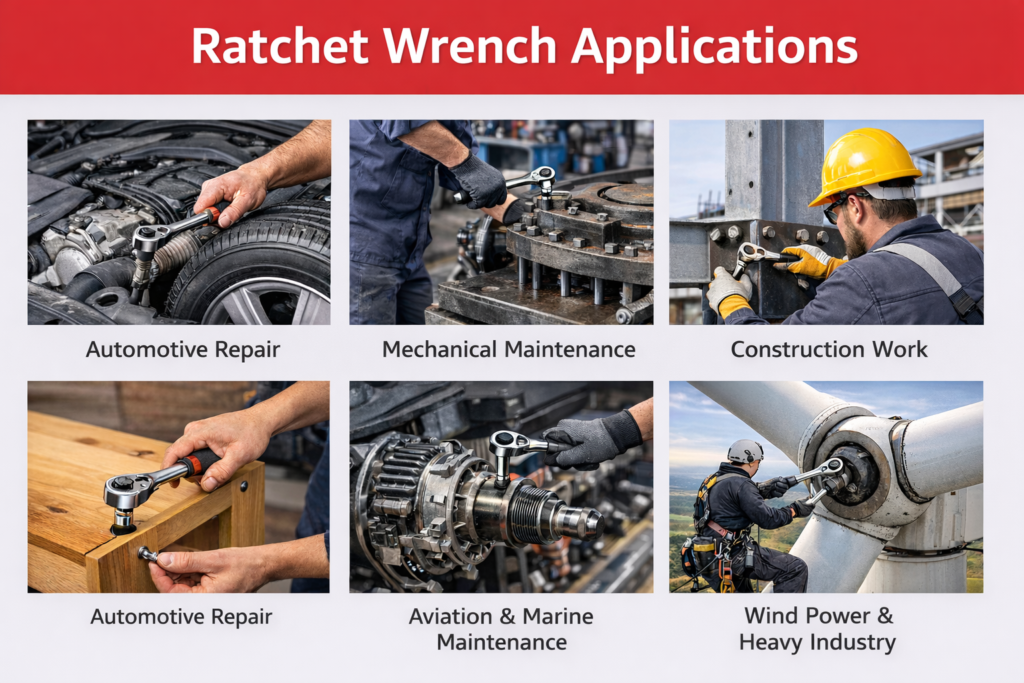
    Automotive Repair

    · Engine Bay Work: Spark plugs, ignition coils, various bracket bolts
    · Interior Disassembly: Seat fasteners, trim panels, control modules
    · Suspension Systems: Link bolts, stabilizer bars, some control arms

    Home Repair and DIY

    · Furniture Assembly: Especially suitable for bolts requiring moderate torque
    · Appliance Maintenance: Washing machines, dryers, water heaters
    · Bicycle Repair: From basic adjustments to full overhauls

    Professional Comparison: When to Choose 3/8″ Over Other Sizes?

    · vs 1/4″: When more torque is needed and space permits
    · vs 1/2″: When working in confined spaces or extreme torque isn’t required
    · Unique Advantage: More durable than 1/4″, better suited for medium-space tasks than 1/2″

    Purchasing Guide: 5 Key Factors

    1. Ratchet Tooth Count – Balancing Precision and Strength

    · High Tooth Count (72+): Ideal for tight spaces and fine adjustments
    · Standard Tooth Count (36-45): General repairs, cost-effective
    · Pro Tip: Consider dual-tooth designs for both precision and durability

    1. Material and Manufacturing Process

    · Chromium-Vanadium Steel (Cr-V): Standard choice, balances strength and toughness
    · Chromium-Molybdenum Steel (Cr-Mo): Professional-grade, higher torque capacity
    · Heat Treatment: Fully hardened models are more durable than partially hardened ones

    1. Handle Design and Ergonomics

    · Contoured Handle: Provides better grip and torque application
    · Quick-Release Button: Enables one-handed socket changes
    · Rubber/Polymer Overmold: Enhances comfort and slip resistance

    1. Reverse Switching Mechanism

    · Lever-Type: Traditional and reliable, glove-friendly
    · Dial-Type: Fast switching, prevents accidental reversal
    · Knob-Type: Compact design for tight spaces

    1. Additional Features

    · Flexible Head: Improves accessibility with adjustable angles
    · Locking Function: Prevents accidental socket detachment
    · Extension Bar Interface: Modular expansion capability

    Maintenance and Safe Usage

    Daily Maintenance Tips

    1. Regular Cleaning: Use solvent to remove grease and debris
    2. Lubrication: Apply light tool oil to the ratchet mechanism
    3. Storage: Keep in a dry environment away from corrosive substances

    Safety Guidelines

    · Never use extension pipes beyond rated torque
    · Ensure sockets are fully engaged before applying force
    · Avoid hammering to increase torque

    Industry Trends and Innovations

    Technological Developments

    · Low-Profile Design: Thinner heads for increased clearance
    · Enhanced Tooth Technology: Smaller swing angles, higher strength
    · Smart Integration: Torque sensing, Bluetooth data transmission

    Sustainability Considerations

    · Eco-Friendly Materials: Renewable handle materials
    · Long-Life Design: Replaceable parts to reduce waste
    · Recycling Programs: Manufacturer take-back initiatives

    Professional Procurement Advice

    Bulk Purchasing Considerations

    · Tiered Procurement: Select different grades based on usage
    · Supplier Audits: ISO certification, quality assurance systems
    · Sample Testing: Real-world application testing

    OEM/ODM Collaboration Points

    · Custom Packaging: Tailored to target market requirements
    · Branding Options: Laser etching or heat stamping
    · Certification Compliance: CE, GS, ASME, and other international standards

    Conclusion: The 3/8″ Ratchet Wrench – An Indispensable Tool Partner

    Whether you’re a professional mechanic or an avid DIYer, the 3/8″ ratchet wrench offers exceptional versatility and reliability. Choosing and maintaining this tool correctly will significantly enhance your work efficiency and quality.