
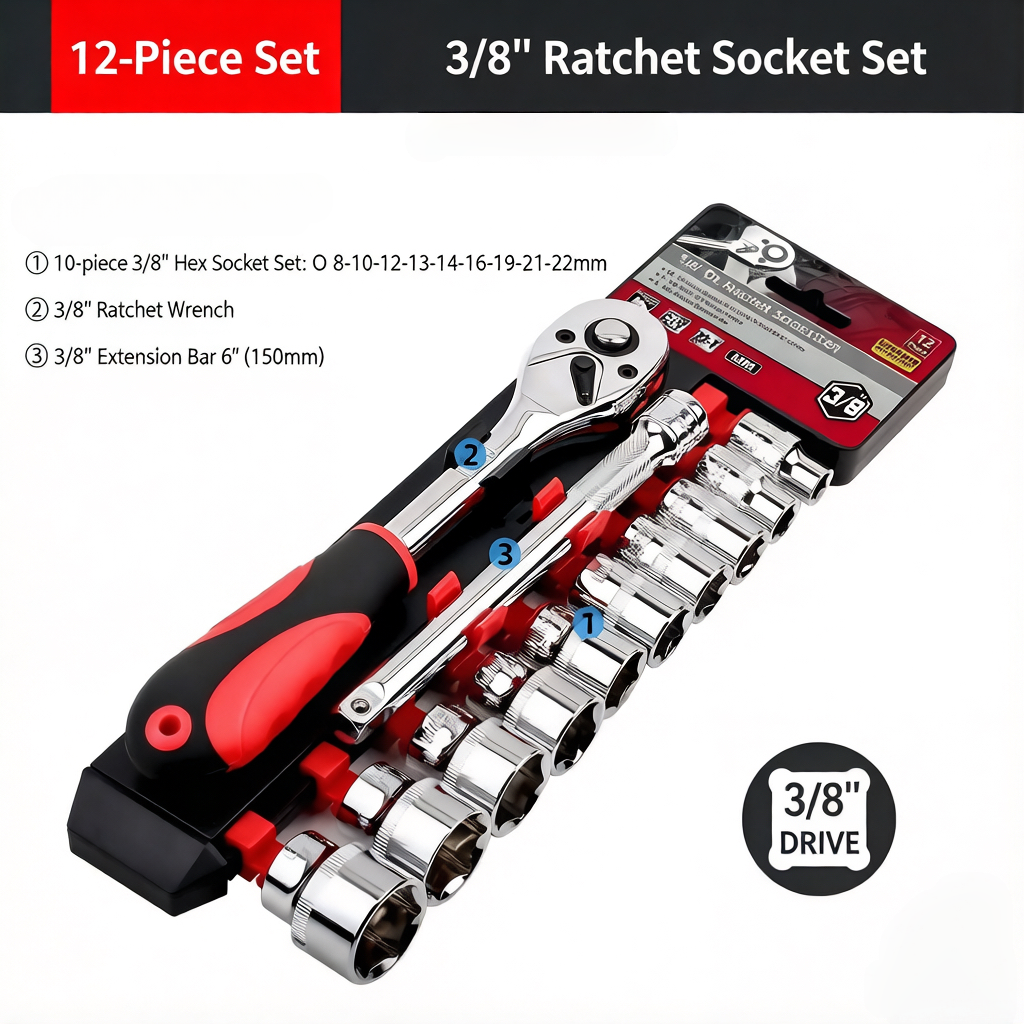
Choosing the right ratchet wrench starts with selecting the correct drive size. The three most common sizes — 1/4″, 3/8″, and 1/2″ ratchet wrenches — are widely used in automotive repair, mechanical maintenance, and industrial applications.
Each size has different advantages in terms of torque, flexibility, and working space. Understanding their differences helps you choose the right tool for your job.
What Do Ratchet Drive Sizes Mean?
The drive size refers to the square connection between the ratchet handle and socket.
- 1/4″ Drive Ratchet: Designed for small fasteners and precision work.
- 3/8″ Drive Ratchet: A versatile choice for most automotive and repair applications.
- 1/2″ Drive Ratchet: Built for high torque and heavy-duty tasks.
The correct drive size improves efficiency and reduces the risk of damaging tools or fasteners.
1/4″ Ratchet Wrench: Compact and Precise
A 1/4-inch ratchet wrench is ideal for small bolts and areas where space is limited.
Common applications include:
- Interior automotive repair
- Motorcycle maintenance
- Electronics and small mechanical parts
Advantages:
- Compact size for tight spaces
- Lightweight and easy to control
- Excellent for precision work
However, its smaller size means it has limited torque capacity and is not suitable for large or heavily tightened fasteners.
3/8″ Ratchet Wrench: The Most Popular Choice
The 3/8-inch ratchet wrench offers the best balance between strength and flexibility. It is one of the most commonly used sizes among automotive technicians.
Typical applications:
- Engine repair
- Vehicle maintenance
- Suspension work
- General workshop repairs
Advantages:
- Suitable for most daily repair tasks
- Good balance of torque and accessibility
- Works with a wide range of socket sizes
For many mechanics, a 3/8″ ratchet is the essential tool in their toolbox.
1/2″ Ratchet Wrench: Maximum Strength
The 1/2-inch ratchet wrench is designed for jobs requiring higher torque.
Common applications:
- Wheel and tire service
- Truck repair
- Heavy equipment maintenance
- Industrial applications
Advantages:
- Stronger construction
- Higher torque capacity
- Suitable for large fasteners
Its larger size provides more power but makes it less convenient in narrow working areas.
1/4″ vs 3/8″ vs 1/2″ Ratchet Wrench Comparison
| Drive Size | Best For | Main Advantage |
|---|---|---|
| 1/4″ | Small fasteners, tight spaces | Maximum flexibility |
| 3/8″ | Automotive repair, general maintenance | Best balance of size and torque |
| 1/2″ | Heavy-duty applications | High strength and durability |
Which Ratchet Wrench Should You Choose?
Choose a 1/4″ ratchet wrench if you mainly work on small components and need excellent access in limited spaces.
Choose a 3/8″ ratchet wrench if you need a reliable all-purpose tool for automotive repair and daily maintenance.
Choose a 1/2″ ratchet wrench if your work involves large bolts, high torque requirements, or heavy-duty equipment.
Professional mechanics often use all three sizes because each one solves different working challenges.
Why Ratchet Quality Matters
Regardless of the drive size, the internal ratchet mechanism determines tool performance.
A professional ratchet wrench should feature:
- High-quality chrome vanadium steel
- Precise gear mechanism
- Smooth ratcheting operation
- Low swing angle for tight spaces
- Reliable long-term durability
A 72-tooth ratchet mechanism with a 5° swing arc allows users to work efficiently in confined areas, making it especially suitable for modern automotive repair environments.
Final Thoughts
The right ratchet wrench depends on your application:
- 1/4″ = Precision and flexibility
- 3/8″ = Versatility and everyday repair
- 1/2″ = Power and heavy-duty performance
For professional workshops and automotive technicians, combining different drive sizes provides the most complete solution.
DOPSIGEN provides professional ratchet wrench and socket tool solutions designed for automotive repair, maintenance, and industrial applications.
:::
Leave a Reply