
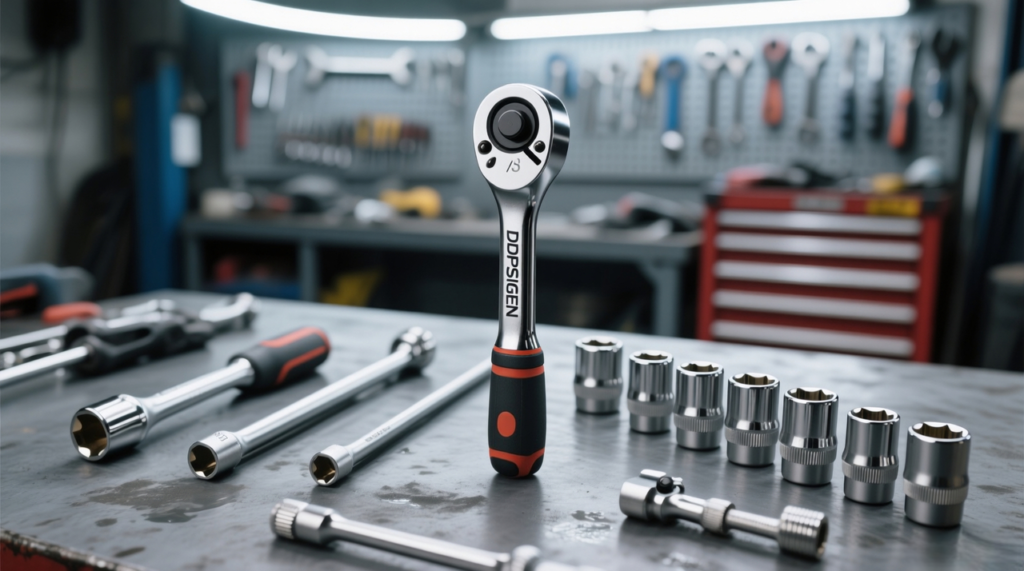
In the professional tool sector, 2026 has marked a decisive shift in end-user preferences. Mechanics, industrial maintenance technicians, and aerospace engineers are moving away from traditional bulky hand tools in favor of ultra-compact, lightweight, high-torque solutions.
As automotive engine bays become increasingly cramped with complex hybrid-electric powertrains and industrial machinery prioritizes high power-to-weight ratios, standard heavy hand tools cause excessive operator fatigue and restricted access.
For hardware brand managers, tool importers, and B2B distributors, adapting your product catalog to feature high-efficiency metallurgy, fine-tooth drive mechanisms, and ergonomic lightweight designs is essential for capturing premium market share.
Here is an analysis of the key engineering innovations driving this market shift and how distributors can capitalize on them.
1. Key Drivers Shaping Market Demand in 2026
The demand for lighter yet stronger hand tools is fueled by three major industry trends:
                  ┌───────────────────────────────────────────┐
                  │ 1. Tightened Machinery Enclosures         │
                  │    • Modern EV/Hybrid vehicle bays leave  │
                  │    minimal swing space for ratchets.      │
                  └─────────────────────┬─────────────────────┘
                                        │
                                        ▼
                  ┌───────────────────────────────────────────┐
                  │ 2. Ergonomics & Ergonomic Fatigue         │
                  │    • Occupational health standards push   │
                  │    for lighter tools to reduce strain.    │
                  └─────────────────────┬─────────────────────┘
                                        │
                                        ▼
                  ┌───────────────────────────────────────────┐
                  │ 3. Advanced Metallurgical Engineering    │
                  │    • Cr-Mo, Titanium, and slim-wall Cr-V  │
                  │    steel achieve higher yield strength.   │
                  └───────────────────────────────────────────┘
- Cramped Work Environments: Automotive manufacturers are packing more components into smaller spaces. Technicians require tool heads with smaller outer profiles and lower head heights to reach deeply recessed fasteners.
- Technician Fatigue & Musculoskeletal Safety: In assembly lines and commercial repair shops, technicians use hand tools for hours continuously. Reducing tool body weight without compromising torque threshold significantly reduces wrist and elbow strain.
- The Rise of High-Efficiency Cordless Impact Drivers: As cordless power tools output higher torque ratings (600+ ft-lbs), hand tools used alongside them—and the sockets attached to them—must handle extreme rotational force without adding unnecessary bulk.
2. Technical Innovations: How Modern Tools Achieve “Lighter & Stronger”
Achieving high torque output while reducing material mass requires precise metallurgical engineering and internal geometry optimization:
| Technical Feature | Traditional Hand Tools | Modern 2026 High-Performance Tools | Performance Advantage |
| Ratchet Gear Tooth Count | 24-Tooth to 45-Tooth (15°-8° arc swing) | 90-Tooth to 120-Tooth (4°-3° micro-arc swing) | Operates in extremely tight spaces with minimal handle movement. |
| Pawl Engagement Geometry | Single-Pawl Lock Mechanism | Dual-Pawl Interlocking System | Distributes load across 6–8 teeth simultaneously, doubling torque capacity. |
| Handle Construction | Solid, heavy steel bar | I-Beam Steel Cross-Section or Hollow Core | Reduces tool body mass by 20%-30% while maintaining bending stiffness. |
| Socket Wall Architecture | Standard uniform thick wall | Computer-Optimized Slim-Wall Cr-V / Cr-Mo | Provides high clearance around recessed lug nuts without cracking under load. |
3. Metallurgy Breakthroughs: Cr-Mo & Specialized Heat Treatment
The key to downsizing tool dimensions without sacrificing ultimate tensile strength lies in advanced metallurgy:
- Micro-Alloyed Chrome Molybdenum (Cr-Mo): Replacing standard carbon steels with high-grade Chrome Molybdenum (such as SCM440/4140) allows manufacturers to reduce wall thickness while increasing fatigue resistance under cyclic impact loads.
- Vacuum Heat Treatment & Precise Tempering: Advanced computer-controlled vacuum furnaces prevent surface decarburization, ensuring uniform core hardness (44-48HRC) and eliminating internal micro-cracks that cause sudden tool failure.
4. Distributor Catalog Recommendations: How to Capitalize
To maximize sales margins and meet growing commercial buyer demand in 2026, distributors should adjust their OEM sourcing strategies:
- Promote Ultra-Compact 90T/120T Ratchet Lines: Highlight micro-arc swing capabilities (3°-4°) in your marketing copy, targeting automotive technicians and HVAC installers.
- Offer Thin-Wall Specialty Impact Sets: Add specialized thin-wall socket sets featuring protective outer nylon sleeves designed for high-end aluminum alloy wheels.
- Bundle Ergonomic Handles: Introduce ergonomic dual-material (TPR/PP) soft-grip handle options that absorb vibration and reduce hand fatigue under high leverage sweeps.
Leave a Reply