
For hardware importers, tool distributors, and workshop owners operating in high-humidity regions—such as coastal industrial hubs, tropical export destinations, and unconditioned warehouse spaces—surface rust (iron oxide) is a constant threat.
Moisture in humid air reacts with oxygen and raw steel surfaces, creating iron oxide. Unprotected ratchet wrenches, sockets, pliers, and precision measuring tools can develop surface pitting and rust within weeks, causing cosmetic degradation, frozen ratchet pawls, and costly inventory markdowns.
Understanding the root causes of corrosion—and implementing multi-layered prevention strategies—ensures hand tools maintain peak finish and functional integrity throughout their lifecycle.
1. Surface Finishes: The First Line of Defense
Preventing rust starts at the factory level. Selecting the right surface plating during product sourcing determines how well steel tools withstand ambient humidity.
                  Corrosion Resistance Hierarchy
  ┌─────────────────────────────────────────────────────────┐
  │ Black Phosphate < Mirror Polish Chrome < Micro-Cr-Ni    │
  └─────────────────────────────────────────────────────────┘
  (Basic Protection)                                (Maximum Protection)
- Micro-Layer Chrome-Nickel Plating (Mirror Polish): Premium hand tools utilize a multi-stage electroplating process: a layer of nickel for adhesion and corrosion protection, topped with a micro-thin layer of chromium for scratch resistance and high luster.
- Satin / Matte Finish Chrome: Offers high corrosion resistance while reducing glare in outdoor working environments and hiding minor fingerprint oils.
- Black Phosphate Coating: Ideal for heavy-duty impact sockets (Cr-Mo steel) where electroplating could flake off under high vibration. Phosphate coatings hold oil well, providing a durable barrier against moisture.
2. Active Rust Prevention Methods in Storage & Transport
Even plated tools can corrode at exposed broachings, inner ratchet gear teeth, or laser-etched markings if moisture settles in sealed storage containers.
A. VCI (Vapor Corrosion Inhibitor) Packaging
For overseas shipping and long-term warehouse storage, VCI technology is the gold standard:
- How It Works: VCI bags, paper liners, or emitter pods release invisible, odorless anti-corrosion molecules that saturate the enclosure and form a protective polar film over all metal surfaces.
- Export Tip: Wrapping tool sets in VCI film inside blow-mold cases prevents moisture damage during multi-week ocean transport across humid maritime transit routes.
B. Desiccant Packs & Humidity Control
- Silica Gel & Clay Desiccants: Absorb free-floating ambient water vapor inside toolboxes and storage cabinets.
- Pro Rule: Desiccants must be replaced or recharged periodically once saturated, as trapped moisture will eventually release back into sealed spaces.
3. Maintenance Protocols for End Users and Workshops
| Protective Action | Recommended Product / Method | Primary Benefit |
| Regular Oiling / Wipedown | Light mineral oil, corrosion-inhibitor sprays (e.g., Boeshield T-9, Fluid Film) | Creates a hydrophobic barrier that repels airborne moisture droplets. |
| Enclosed Storage | Heavy-duty blow-mold cases or sealed steel tool chests | Limits exposure to ambient air movement and humidity fluctuations. |
| Clean Before Storage | Microfiber cloth wipedown after every shift | Removes acidic hand sweat, salts, and grime that accelerate rusting. |
| Air Circulation | Dehumidifiers or continuous circulation fans in shop spaces | Prevents air stagnation and condensation formation on cold metal surfaces. |
4. Quality Control Benchmarks for Tool Procurement
When sourcing hand tools for humid domestic or export markets, insist on rigorous laboratory testing from your OEM manufacturing partners:
- Salt Spray Test (ASTM B117 Compliance): Verify that chrome-plated hand tools pass a minimum 24-hour to 48-hour neutral salt spray test without showing red rust formation.
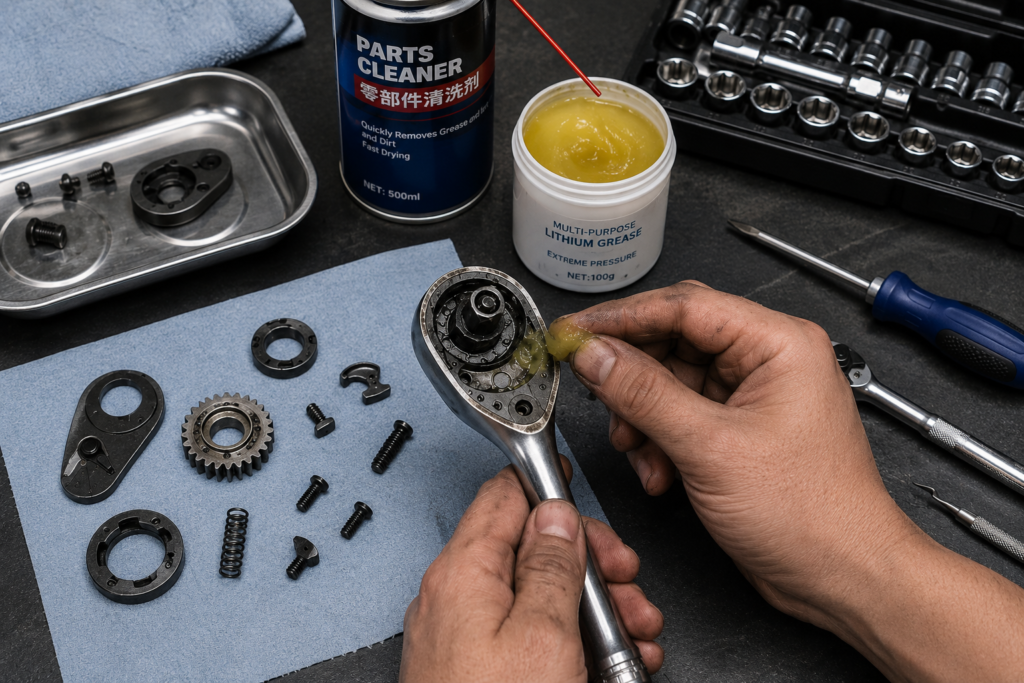
- Internal Gear Lubrication: Ensure ratchet mechanisms are factory-greased with high-viscosity synthetic grease, protecting internal pawls and springs from trapped ambient moisture.
Leave a Reply