
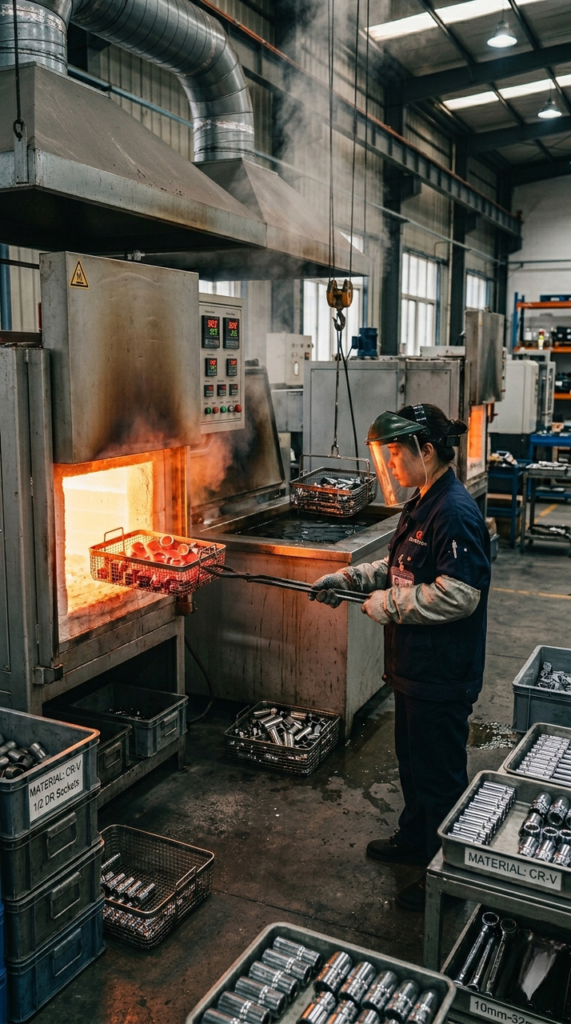
When choosing professional hand tools, buyers often focus on material strength, torque performance, and manufacturing precision. However, the surface treatment of a tool is equally important. A proper surface finish not only improves appearance but also affects corrosion resistance, durability, grip comfort, and overall user experience.
For socket wrenches, ratchet handles, and other metal tools, three common surface treatments are mirror polish, matte finish, and black phosphate coating. Each option has unique advantages and is suitable for different applications.
In this article, we will compare these three surface treatments and help you understand which finish is the best choice for your tools.
Why Surface Treatment Matters in Hand Tool Manufacturing
Metal tools are frequently exposed to challenging working conditions, including:
- Moisture and humidity
- Oil and grease
- Dust and chemicals
- High friction during operation
- Heavy-duty mechanical stress
Without proper surface protection, steel tools can suffer from:
- Rust and corrosion
- Surface wear
- Reduced service life
- Poor appearance after long-term use
A high-quality surface treatment provides additional protection while improving the tool’s functionality and market value.
1. Mirror Polish Finish: Premium Appearance and Easy Cleaning
What Is Mirror Polishing?
Mirror polishing is a surface finishing process that creates a highly smooth and reflective surface. Through multiple stages of grinding and polishing, microscopic scratches and imperfections are removed, resulting in a bright, mirror-like appearance.
This finish is commonly used on:
- Chrome sockets
- Premium ratchet wrenches
- High-end hand tools
- Professional automotive tools
Advantages of Mirror Polish
1. Excellent Appearance
The biggest advantage of mirror polish is its premium look. The shiny surface creates a high-end visual effect, making tools more attractive to professional users and retail customers.
For brands targeting the premium market, mirror-polished tools can enhance perceived value.
2. Easy to Clean
The smooth surface makes it difficult for dirt, oil, and grease to stick. Users can easily wipe away contaminants after use.
This is especially beneficial for:
- Automotive repair shops
- Maintenance technicians
- Industrial environments
3. Good Corrosion Resistance When Combined with Chrome Plating
Mirror polishing is often combined with chrome plating. The chrome layer provides additional corrosion protection and improves surface hardness.
Limitations of Mirror Polish
Despite its advantages, mirror polish also has some limitations:
- Higher manufacturing cost
- Fingerprints and scratches are more visible
- Reflective surfaces may create glare under strong lighting
Therefore, mirror polish is usually chosen for premium products rather than cost-focused tools.
2. Matte Finish: Practical, Durable, and Professional
What Is Matte Finish?
A matte finish is created by processes such as sandblasting, bead blasting, or fine grinding. Instead of a shiny surface, it produces a smooth but non-reflective texture.
Matte finishes are widely used in professional-grade hand tools.
Advantages of Matte Finish
1. Better Grip and Handling
The slightly textured surface improves friction between the tool and the user’s hand.
This is helpful when working in:
- Wet environments
- Oily conditions
- High-temperature applications
2. Hides Scratches and Wear
Unlike mirror-polished surfaces, matte finishes do not easily show fingerprints or minor scratches.
This makes tools look newer for longer, especially in demanding working environments.
3. Professional Industrial Appearance
Many mechanics and technicians prefer matte-finished tools because they look rugged and practical.
The finish communicates:
- Durability
- Reliability
- Professional performance
Limitations of Matte Finish
The disadvantages include:
- Slightly harder to clean than mirror surfaces
- Lower visual impact for retail displays
- Usually requires additional corrosion protection
For heavy-duty workshop tools, however, these disadvantages are often minor.
3. Black Phosphate Finish: Maximum Protection for Heavy-Duty Applications
What Is Black Phosphate Coating?
Black phosphate is a chemical conversion coating applied to steel surfaces. The process creates a protective phosphate layer that improves corrosion resistance and provides a suitable base for oil retention.
It is commonly used for:
- Industrial tools
- Military-style equipment
- Impact sockets
- Heavy-duty automotive tools
Advantages of Black Phosphate
1. Excellent Corrosion Protection
The phosphate layer helps protect steel surfaces from oxidation, especially when combined with oil treatment.
This makes black phosphate ideal for environments where tools are exposed to moisture or harsh conditions.
2. Superior Performance for Impact Tools
Black phosphate is widely used on impact sockets because the surface treatment maintains durability under high torque and repeated impact forces.
3. Better Oil Retention
The porous structure of phosphate coating can retain lubricating oil, helping reduce friction and improve long-term protection.
Limitations of Black Phosphate
Some disadvantages include:
- Less attractive appearance compared with chrome finishes
- Requires proper maintenance for maximum corrosion resistance
- Surface may feel rougher than polished finishes
Black phosphate is designed for performance rather than appearance.
Mirror Polish vs. Matte Finish vs. Black Phosphate: Comparison Table
| Feature | Mirror Polish | Matte Finish | Black Phosphate |
|---|---|---|---|
| Appearance | Bright and premium | Professional and industrial | Dark and rugged |
| Corrosion Resistance | Good (with plating) | Good (with coating) | Excellent with oil protection |
| Scratch Visibility | Higher | Lower | Low |
| Cleaning | Very easy | Moderate | Moderate |
| Grip Performance | Smooth | Better grip | Good |
| Manufacturing Cost | Higher | Medium | Medium |
| Best Application | Premium hand tools | General professional tools | Heavy-duty impact tools |
Which Surface Treatment Should You Choose?
The best surface treatment depends on the tool’s application and target market.
Choose Mirror Polish If:
- You want a premium appearance
- Your customers value product presentation
- The tools are mainly used in workshops or retail environments
- You are targeting professional mechanics and automotive users
Choose Matte Finish If:
- You need a balance between appearance and performance
- Users require better grip
- Tools are used frequently in demanding environments
- You want a durable professional look
Choose Black Phosphate If:
- The tools are designed for heavy-duty applications
- Impact resistance is important
- Users work in harsh environments
- Maximum corrosion protection is required
How Professional Tool Manufacturers Select Surface Treatments
Experienced tool manufacturers consider several factors before choosing a finish:
Material Selection
Chrome vanadium steel (Cr-V) and chrome molybdenum steel (Cr-Mo) may require different surface treatments depending on their application.
Working Environment
Automotive repair, industrial maintenance, and construction environments have different requirements.
Product Positioning
Premium retail tools may prioritize appearance, while industrial tools focus more on durability and protection.
Customer Expectations
Different markets prefer different finishes. Understanding customer needs is essential for creating competitive products.
Conclusion: The Right Finish Creates Better Tools
Mirror polish, matte finish, and black phosphate each provide unique benefits.
- Mirror polish delivers premium appearance and easy maintenance.
- Matte finish provides durability, practicality, and professional handling.
- Black phosphate offers excellent protection for heavy-duty applications.
For tool manufacturers and buyers, choosing the right surface treatment is not only about appearance—it directly influences product performance, customer satisfaction, and brand reputation.
A well-designed tool combines high-quality steel, precise manufacturing, and the right surface treatment to deliver reliable performance in every working condition.
Leave a Reply