
A Practical Guide to Ratchet Maintenance and Durability
Many mechanics and technicians have experienced this:
When a ratchet wrench is brand new,
it feels smooth, precise, and solid.
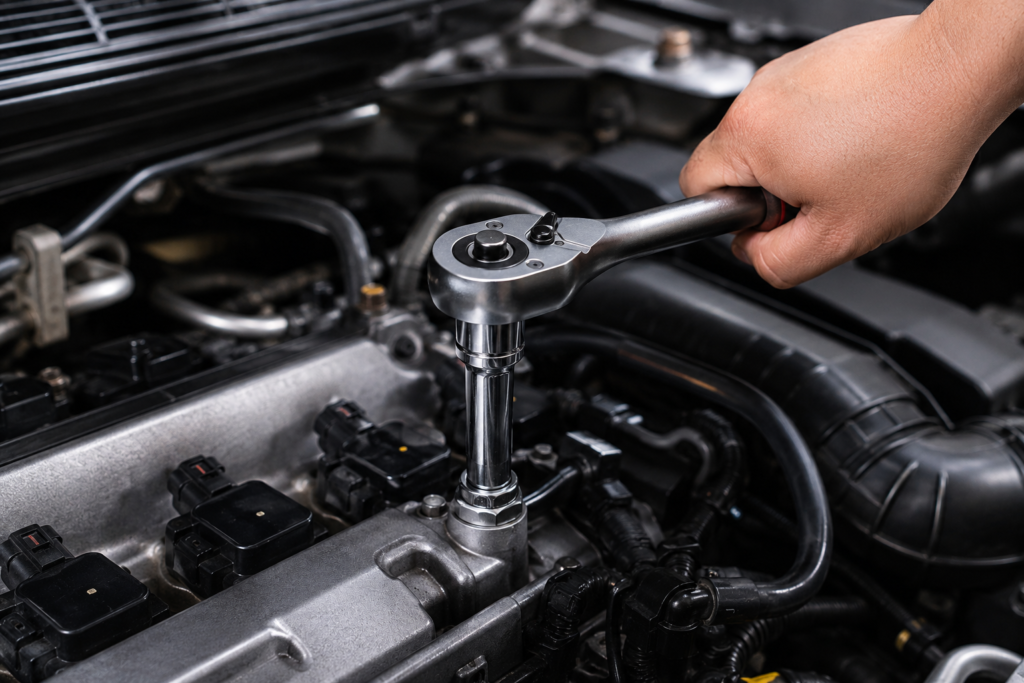
But after months or years of use, problems begin to appear:
• The ratchet starts sticking
• Rotation becomes rough
• The mechanism slips under force
• The ratchet free-spins without engagement
• In severe cases, the gear teeth even chip or break
Most people think the tool is simply “worn out.”
But in reality, most of these problems come from:
Internal gear wear + lack of maintenance + poor material quality.
In this article, we’ll explain:
• Why ratchet wrenches stick or slip
• How to properly disassemble, clean, and lubricate them
• Why cheap ratchets fail more easily
• How to identify a truly durable ratchet wrench
⸻
- Why Do Ratchet Wrenches Stick or Slip?
- Dirt, Dust, and Metal Debris Build-Up
Inside every ratchet head is a highly precise gear mechanism.
During daily use, the following contaminants slowly enter the mechanism:
• Dust
• Metal particles
• Oil residue
• Iron filings
Especially in automotive repair environments,
brake dust and grease contamination accelerate wear.
Over time, this leads to:
• Incomplete pawl engagement
• Slow spring return
• Increased rotational resistance
• Sticking and abnormal noise
This is one of the biggest reasons older ratchets feel rough and inconsistent.
⸻
- Lack of Lubrication
Many users never maintain or lubricate their ratchets.
However:
A ratchet mechanism is a high-friction moving system.
Without proper lubrication:
• Gears wear faster
• Pawls grind against metal surfaces
• Springs weaken
• Ratcheting becomes rough and noisy
In severe cases, the ratchet may click but fail to transfer torque.
⸻
- Low Tooth Count Creates Higher Stress
This is one of the most common problems with low-end ratchets.
Many inexpensive ratchets use:
• 24-tooth gears
• 36-tooth gears
Fewer teeth mean:
• Higher stress on each tooth
• Larger engagement gaps
• Increased chance of slipping
• Higher risk of chipped teeth
At the same time, fewer teeth require a larger swing arc.
For example:
• 24T ≈ 15°
• 36T ≈ 10°
• 72T ≈ 5°
A 72-tooth precision ratchet provides smoother operation and easier access in tight spaces.
⸻
- Why Do Cheap Ratchets Fail So Easily?
The Real Problem: Material and Heat Treatment Quality
Many low-cost products advertise “CR-V steel,”
but the material name alone means very little.
True durability depends on:
• Steel purity
• Forging quality
• Heat treatment process
• Gear machining precision
Common issues with inferior CR-V steel include:
• Insufficient gear hardness
• Tooth deformation under load
• Poor toughness
• Chipped teeth after repeated high torque use
In high-frequency automotive repair environments,
the difference becomes very obvious.
⸻
- How to Properly Disassemble, Clean, and Lubricate a Ratchet (Gear Maintenance)
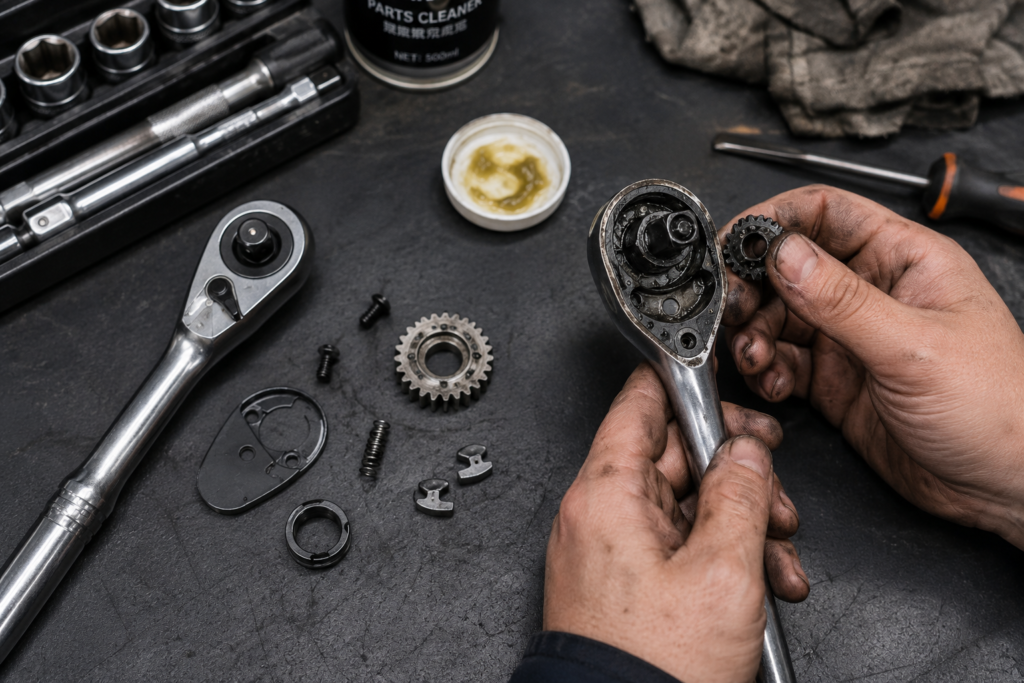
Step 1 — Open the Ratchet Head
Usually, you only need to:
• Remove the backplate screws
• Or remove the retaining snap ring
Then carefully take out:
• Gear
• Pawl
• Springs
Be careful not to lose the small springs.
⸻
Step 2 — Clean the Internal Components
Recommended cleaners:
• Degreaser
• Carburetor cleaner
• Industrial alcohol
Focus on removing:
• Old grease
• Metal debris
• Dust and contaminants
After cleaning:
Make sure all components are completely dry before reassembly.
Residual liquid can affect lubrication performance.
⸻
Step 3 — Inspect the Gear Teeth
Check for:
• Chipped teeth
• Rounded gear edges
• Worn pawls
• Weak springs
If the teeth are already badly damaged:
Lubrication alone will not solve the problem.
⸻
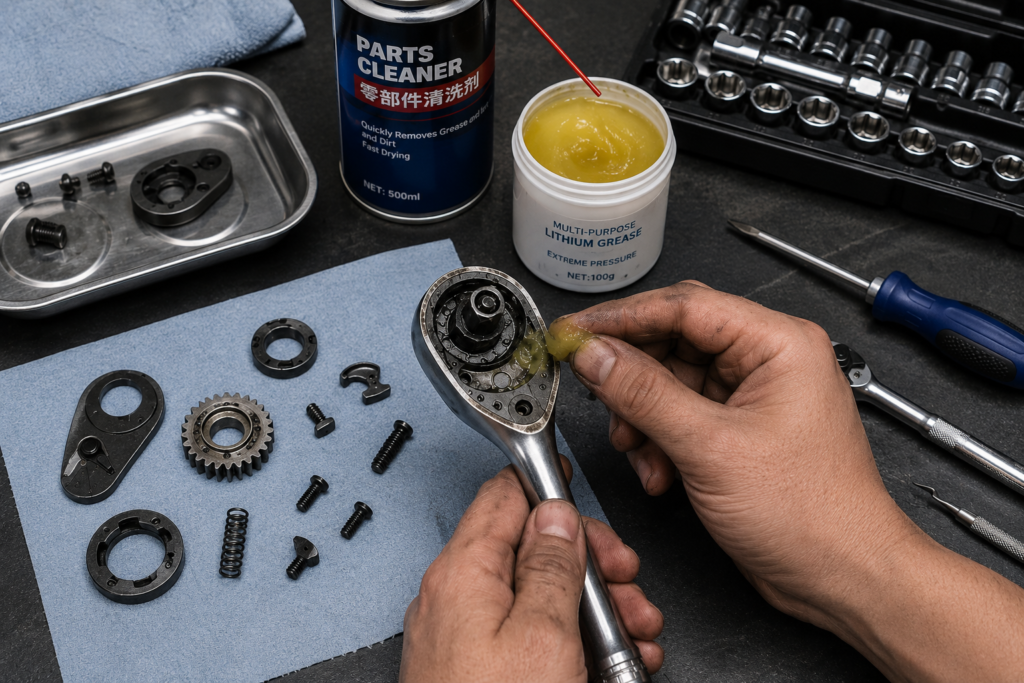
Step 4 — Apply Fresh Lubrication
Recommended:
• Mechanical grease
• Ratchet-specific lubricant
Important:
Do not apply excessive grease.
Too much lubricant attracts dust and debris.
A thin layer is enough.
⸻
Step 5 — Reassemble and Test
After reassembly:
• Test forward/reverse switching
• Rotate under light load first
• Confirm smooth engagement
In most cases, a properly serviced ratchet will feel significantly smoother after maintenance.
⸻
- Why Do Professional-Grade Ratchets Last Longer?
Professional-grade ratchets are engineered differently from the beginning.
Advantages of Our Ratchet System
72-Tooth Precision Ratchet Mechanism
Benefits include:
• Finer engagement
• Smaller swing arc
• Easier operation in tight spaces
• Lower stress per tooth
• Reduced risk of slipping
⸻
High-Strength CR-V Material
We use premium chrome vanadium steel (CR-V) for:
• Higher strength
• Better toughness
• Improved wear resistance
• Greater impact durability
• Resistance to deformation under high torque
⸻
Precision Heat Treatment
Advanced heat treatment ensures:
• Stable gear hardness
• Improved pawl durability
• Long-term resistance to tooth chipping
This is one of the biggest differences between professional tools and low-end products.
⸻
Built for High-Frequency Professional Use
Whether used for:
• Automotive repair
• Industrial maintenance
• Machinery service
• Workshop applications
Durability and consistency are what truly matter.
⸻
- A Great Ratchet Is About More Than Torque
A professional ratchet wrench is not just about turning bolts.
What really matters is:
• Long-term reliability
• Smooth operation
• No slipping
• No broken teeth
• Better working efficiency
Because for professional technicians:
Tool performance directly affects productivity.
And true durability always comes from the internal structure you cannot see.
Leave a Reply